Photo: Anna Shvets via Pexels
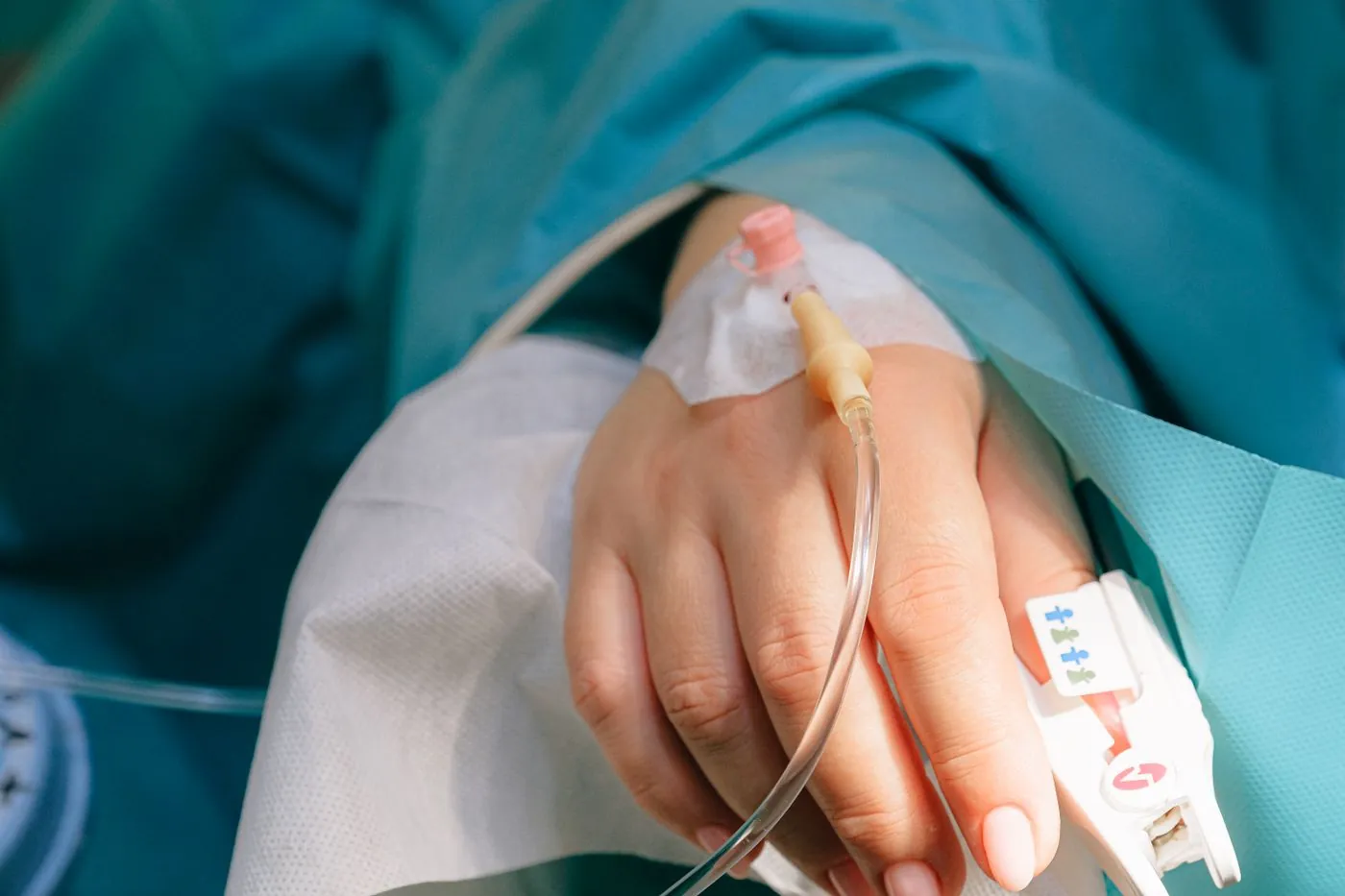
Infiltration is the unintended leak of a non-vesicant solution or medication into the tissue around an IV site; extravasation is the same event with a vesicant, a drug that produces blisters and can cause severe tissue damage. The Infusion Nurses Society definitions turn on what leaked, not on how the site looks.
Two nurses chart the same swollen forearm on different shifts. One writes "infiltration" and the other writes "extravasation." The skin looks similar in both notes. The difference is in the bag: what was running, and whether it can injure tissue. A single word in a record can decide how urgently the event is treated as a risk, how it is reported and how a later reader understands it.
This article explains how the two terms are defined, how drugs are grouped, what the published literature says about how often these events occur, the risk factors it lists, and how skills labs assess the competency. It is education about standards and evidence, not instruction for a patient. Your facility's protocol, the orders and the responsible clinician decide what happens in real care.
The definitions most nursing programs teach come from the Infusion Nurses Society (INS) Standards of Practice. A 2018 study in the Journal of Infusion Nursing by Odom, Lowe and Yates quotes the 2016 edition: infiltration is "the inadvertent delivery of nonvesicant fluid or medication into surrounding tissue," and "vesicant fluid that has leaked into the tissue space is called extravasation." A 2021 case report in the International Wound Journal gives the same definition of infiltration. INS has since published its 9th edition (Nickel and colleagues, Journal of Infusion Nursing, 2024), which I could confirm only as a citation record, so check current wording in the edition your facility follows.
Published sources do not always draw the line in the same place. A 2020 guideline article in the Journal of Educational Evaluation for Health Professions (Kim and colleagues) defines extravasation as "the leakage of an injected drug out of the blood vessels, damaging the surrounding tissues," a broader wording that does not require a vesicant. The large 2020 review of peripheral catheter complications pooled the two together as "infiltration/extravasation." None of this is an error; it is a reminder that a word in a record needs its definition, and that your facility's policy supplies the one you are held to.
Kim and colleagues sort extravasated drugs by damage potential into vesicants, irritants and non-vesicants, and divide vesicants into DNA-binding and non-DNA-binding agents. The grouping explains why the same swollen arm can mean different things. Al-Benna and colleagues' 2013 review in ISRN Dermatology describes irritants as agents that produce local inflammation, pain, tightness or phlebitis without inducing tissue necrosis, and vesicants as agents that produce blisters, linking them to the severe tissue damage seen with vesicant chemotherapy drugs. In the 2021 case report on a severe infiltration, the authors note that grade 4, the most severe, may result in serious complications including full skin loss.
A published hospital scale shows how seriously substance is taken. In Odom and colleagues' study, the pediatric infiltration scale (adapted from one used at a Dallas children's hospital, not from INS) states that infiltration of blood products or irritants is an automatic grade 4 injury regardless of appearance. The point for a learner is that appearance and drug are separate inputs. A site that looks mild can still be a serious event when the drug is the wrong one to leak, which is why drug knowledge is assessed alongside site assessment.
Appearance does not make the diagnosis; the drug does. Skills labs teach nurses to ask what was infusing before they decide how to describe an event.
Numbers depend on population, setting and definition, so no single figure is "the" rate. The largest recent synthesis is Marsh and colleagues' 2020 systematic review and meta-analysis in the Journal of Advanced Nursing, which pooled 70 observational studies and 33 randomized trials covering 76,977 peripheral catheters. It reported pooled rates of 13.7 percent for infiltration or extravasation, 19.3 percent for phlebitis (when a definition was given), 8 percent for occlusion, 7.3 percent for leakage, 6.4 percent for pain and 6.0 percent for dislodgement. In a subgroup analysis, the infiltration or extravasation rate was higher for catheters inserted in emergency departments, at 25.2 percent.
For extravasation specifically, Kim and colleagues report that the frequency in adults is between 0.1 percent and 6 percent, without attaching a specific source to the sentence. In children the literature quoted by Odom and colleagues is higher: they cite pediatric rates that "can range from 10% to 30%," possibly as high as 58 percent, and neonatal rates reaching 55 to 70 percent, but they do not report a true incidence rate themselves because their study did not have the number of infusions as a denominator. Treat all of these as ranges from different populations rather than predictions.
Kim and colleagues group risk factors into patient, procedure and product. Patient factors include fragile or hard-to-access veins, previous repeated venipuncture, limb movement, obesity, and lymph node excision or amputation affecting the limb. Procedure factors include inexperienced staff, multiple cannulation attempts and high flow pressure. Product factors include an inappropriate catheter or needle choice, inadequate dressings and poor cannula fixation.
The grouping is useful for teaching because it shows that many of the factors can be influenced by decisions made before and around the insertion, not only after a problem appears. Our article on peripheral IV dwell time covers how standards frame replacement decisions, and the one on ultrasound-guided IV training covers one approach to difficult access.
The wording in a chart is read by the next nurse, by pharmacy, by a physician, by a quality reviewer and sometimes by a lawyer. Programs therefore teach the vocabulary alongside the skill: name the event accurately, name what was infusing, describe the site in observable terms, record the grade on the facility's scale, record when it was noticed and who was told, and follow the facility's reporting pathway. The INS scale referred to in the 2021 case report runs from 0 to 4, with grade 4 the most severe, and exact descriptors differ by edition and by facility, which is why this article does not reproduce them.
Documentation is also where the two terms collide in practice. An event recorded as infiltration when a vesicant was running understates the risk; an event recorded as extravasation without naming the drug leaves the reader guessing. A short, specific entry is worth more than a long vague one. Our article on IV infiltration standards goes further into assessment frequency and documentation, and the SBAR guide shows how a concern about a site is communicated.
Name the drug and describe what you see. "Infiltration" is a conclusion. The record is stronger when it states the infusate, the site as observed and the time, so a reader can reach the same conclusion independently.
Competency checklists typically separate four things; this is a teaching summary, not a published standard, and your program's checklist governs. The first is vocabulary: can the learner define infiltration and extravasation and explain what distinguishes them? The second is recognition and grading: using a training arm or a case description, can the learner describe a site consistently with another assessor and assign a grade on the facility's scale? Inter-rater agreement is the point of a scale, so assessors often have two learners grade independently and compare.
The third is drug awareness: given an infusion, can the learner find out whether it is a vesicant or irritant using the facility's drug reference, and say what that implies for monitoring and escalation under policy? The fourth is communication and documentation: can the learner report the concern clearly and write a record another clinician can rely on? The NCLEX shows the same emphasis. The 2026 NCLEX-RN Test Plan, effective April 2026, lists "Monitor intravenous infusion and maintain site" within Parenteral/Intravenous Therapies, part of the Pharmacological and Parenteral Therapies category, which it gives as 13 to 19 percent of items.
What assessors generally do not ask is whether the learner has memorized a treatment sequence for a particular drug. Antidotes and specific responses are drug-specific, are defined by a facility's protocol and pharmacy, and are outside the scope of this article.
Printable study guide
Peripheral IV Maintenance
A printable PDF from Wahero Health Institute covering the basic skills of peripheral IV maintenance, with a quick reference on what to look for at the site. Study material for nursing students and nurses; yours to keep and print as often as you like.
Peripheral IV Maintenance, $12.99
Pay by Cash App, PayPal or Zelle at checkout; the download link is emailed once the payment is confirmed, usually the same day. Study material only: it does not replace the Board's requirements, your employer's policies or the judgment of a licensed clinician.
Educational use. This article is learning material for nurses and nursing students. It is not clinical advice, and it does not replace your employer's policies, your facility's protocols, or the judgement of a licensed clinician. Always follow the standards and procedures in force where you practise.
Every source below was opened on the date shown. Pages change, so confirm current details on the source itself.
What is the difference between infiltration and extravasation? The Infusion Nurses Society definitions, as quoted in a 2018 Journal of Infusion Nursing study, turn on what leaked. Infiltration is the inadvertent delivery of a non-vesicant fluid or medication into surrounding tissue, and extravasation is a vesicant fluid that has leaked into the tissue space. The two can look alike at the skin, which is why the drug matters.
What is a vesicant? A vesicant is a drug that produces blisters and can cause severe tissue damage when it leaks out of a vessel, according to a 2013 review in ISRN Dermatology. A 2020 guideline article in the Journal of Educational Evaluation for Health Professions sorts extravasated drugs into vesicants, irritants and non-vesicants, and divides vesicants into DNA-binding and non-DNA-binding agents. Which drug belongs in which group is set by drug references and facility policy, not by this article.
How common is infiltration? A 2020 systematic review and meta-analysis in the Journal of Advanced Nursing, covering 76,977 peripheral catheters, pooled a 13.7 percent rate for infiltration or extravasation, and a higher 25.2 percent for catheters inserted in emergency departments. The review combined the two terms, so it does not give an extravasation rate on its own.
Is there a scale for grading infiltration? Yes. A 2021 case report in the International Wound Journal states that the Infusion Nurses Society Standards of Practice recommend classifying peripheral IV infiltration into five grades from 0 to 4. Scale wording differs by edition and facility, so use your facility's current scale and the current Standards of Practice.
Does this article tell me what to do for a patient with a leaking IV? No. It explains the terms, the published evidence and how the skill is taught and assessed. What to do for a real patient is set by your facility's protocol, the orders and the responsible clinician, and a nurse should follow those.
Recognizing, grading and documenting an infusion complication is a skill that benefits from being watched by an assessor. Wahero Health Institute delivers in-person IV therapy training across Texas, assessed under observation. See the IV Therapy course, or use the free IV competency checklist.
Related reading
Educational content only
This material is published by Wahero Health Institute for professional education and is not individual medical advice, a care protocol, or a substitute for clinical judgment. Always follow your facility's policies, your state's nurse practice act, and your own scope of practice, and confirm medication doses against a current authoritative reference before administration. See our Terms of Use.