Photo: Chokniti Khongchum via Pexels
A nurse is told that a patient is "on oxygen" and, in the same breath, that the patient's breathing is worse than it was an hour ago. The question that matters next is not only how much oxygen is flowing but what the device in front of her is capable of delivering. A nasal cannula that is already doing everything a nasal cannula can do cannot be turned up to meet a bigger need. Recognizing that ceiling is what separates a nurse who knows the equipment from one who has only seen it.
Oxygen delivery devices are among the most examined pieces of equipment in nursing education because the principles behind them are few and they explain everything else. This article compares the main classes as they are taught and assessed: how each works, what the published standards say about prescribing and monitoring oxygen, what the recent evidence says about giving too much of it, and how a skills lab validates the competency.
It describes equipment and principles. It does not tell any nurse which device or which setting to use for a patient, because that comes from an order, the patient's condition and a facility protocol. Where your facility's practice differs from what is described here, follow the facility.
The British Thoracic Society (BTS) guideline for oxygen use in adults in healthcare and emergency settings, published in Thorax in 2017 under the lead authorship of Bronagh O'Driscoll, is the most widely cited guideline in this area. Its core position is that oxygen is a drug, that it should be prescribed with a target saturation range, and that it should be monitored and adjusted toward that range. The guideline gives a default range for most acutely ill adults and a lower one for people at risk of hypercapnic respiratory failure, a condition in which carbon dioxide builds up. The BTS has been developing a new guideline on target oxygen saturations, so readers should check the current version on the BTS website rather than rely on any number quoted in an article.
In the United States the American Association for Respiratory Care (AARC) published a clinical practice guideline in 2021, Management of Adult Patients With Oxygen in the Acute Care Setting (Piraino and colleagues, Respiratory Care, 2022). It was built from a systematic review and makes recommendations on oxygenation targets, monitoring, and the use of high-flow nasal cannula and humidification. It replaced the AARC's earlier 2002 guideline on oxygen therapy for adults in the acute care facility, so older teaching materials may cite the earlier document. The practical point for a learner, on both sides of the Atlantic, is that every oxygen device is a piece of a plan: a goal exists, and the nurse's job includes checking that the device in use can reach it. Facility policy sets who writes the order and how.
Most programs teach oxygen devices in three classes, and the organizing question is the same for each: does the device supply all the gas the patient breathes in, or only part of it?
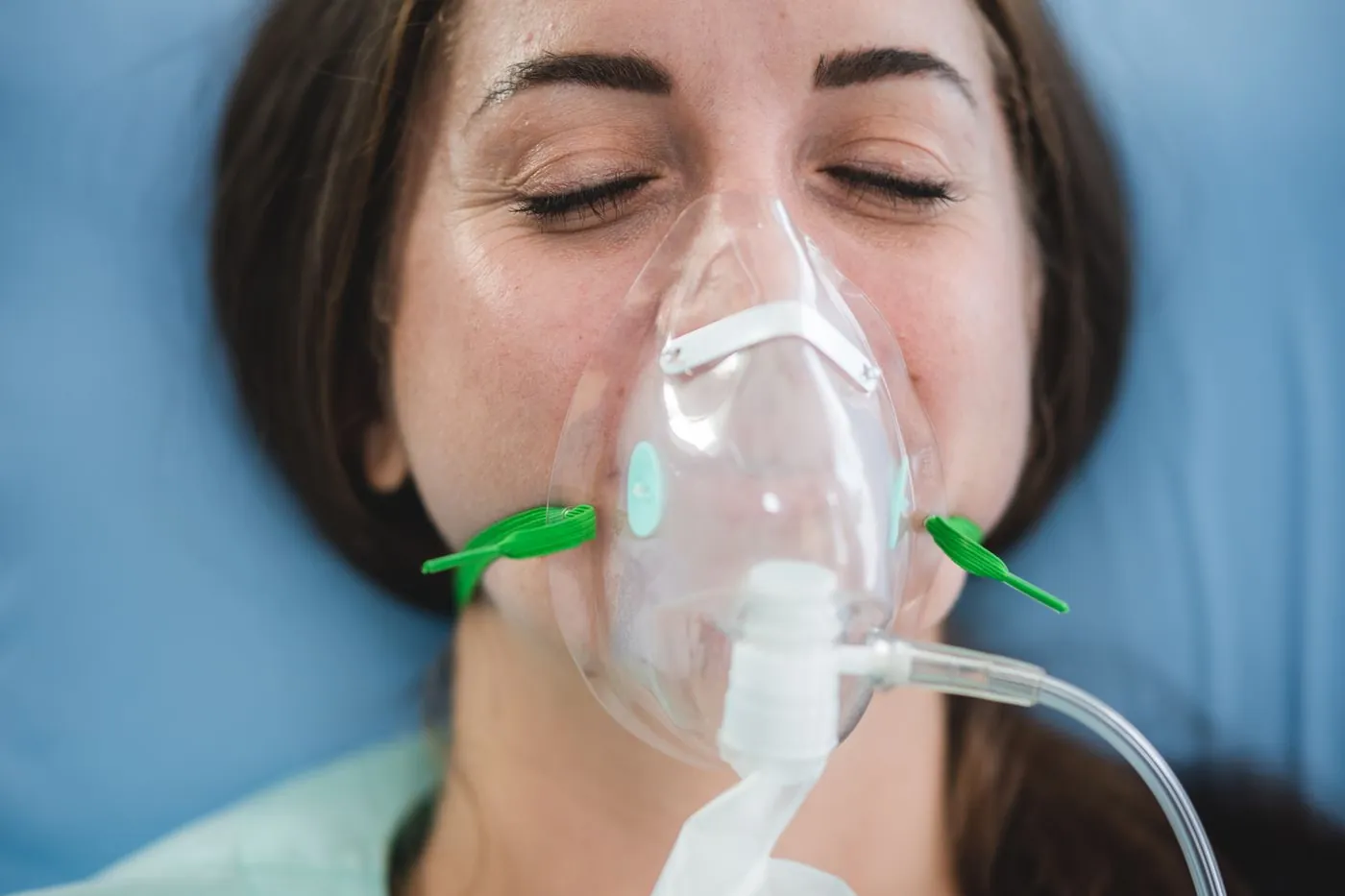
Low-flow, variable-performance devices include the nasal cannula, the simple face mask and the reservoir masks, such as the partial rebreather and non-rebreather. Their flow of gas is less than the patient's inspiratory flow, so the patient also draws in room air around or through the device. The concentration the patient receives therefore changes with the breathing pattern: faster, deeper breathing dilutes the oxygen more. This is the single most important idea in the topic, and it is why a nominal setting on the flowmeter is not the same as a delivered concentration.
Fixed-performance devices such as air-entrainment (Venturi-type) masks are built to deliver a set concentration regardless of the patient's breathing, because the device itself controls how much room air is mixed in. They are the standard teaching example of why a precise concentration is sometimes required, notably in patients for whom the target range is deliberately lower.
High-flow systems, including heated and humidified high-flow nasal cannula, deliver gas at flows meant to meet or exceed inspiratory demand, with the oxygen concentration set on the machine. Evidence for their use in acute hypoxemic respiratory failure includes the FLORALI trial by Frat and colleagues in the New England Journal of Medicine in 2015, which compared high-flow nasal oxygen with standard oxygen and with non-invasive ventilation and reported a lower 90-day mortality in the high-flow group as a secondary outcome; its primary outcome, the proportion of patients intubated by day 28, did not differ significantly between the groups. Facility policy defines where these systems are used and who may start and adjust them.
Printable study guide
Medication Administration Skills
A twelve-page simple study guide to medication administration skills from Wahero Health Institute. Oxygen is prescribed like a drug, so the order-checking and documentation habits it teaches carry straight over.
Medication Administration Skills, $12.99
Pay by Cash App, PayPal or Zelle at checkout; the download link is emailed once the payment is confirmed, usually the same day. Study material only: it does not replace the Board's requirements, your employer's policies or the judgment of a licensed clinician.
For decades, giving extra oxygen to a sick patient was treated as harmless insurance. The IOTA systematic review published in The Lancet in 2018 by Chu and colleagues challenged that. It pooled 25 randomized controlled trials involving 16,037 acutely ill adults, including patients with sepsis, critical illness, stroke, trauma, myocardial infarction and cardiac arrest, and compared liberal with conservative oxygen strategies. Liberal oxygen was associated with higher in-hospital mortality (relative risk 1.21, 95 percent confidence interval 1.03 to 1.43) and higher 30-day mortality (relative risk 1.14, 1.01 to 1.29), without any gain in other patient-important outcomes.
The caution is as important as the finding. The IOTA authors reported that their result was robust to sensitivity analyses, but a 2019 commentary in Critical Care by Vargas and Servillo applied the fragility index to the included trials and argued that the pooled result rests on trials with low fragility, so it is less certain than a single headline suggests. What the evidence has changed is the default posture. Guideline bodies increasingly describe a target range with a floor and a ceiling instead of "as much as it takes", which is why the prescription carries a range and why monitoring against it is part of the nursing role.
"On oxygen" is not a complete sentence. A usable handover names the device, the target the order sets and the reason. Anything less leaves the next nurse guessing what the device is supposed to achieve.
Fire. Oxygen does not burn, but it makes everything else burn faster and hotter. The National Fire Protection Association's NFPA 99, the Health Care Facilities Code, sets requirements for medical gas systems in health care, and facility policy covers ignition sources, smoking, open flames and electrical equipment around oxygen. Skills labs usually ask learners to state these rules and to recognize a hazard in a staged scene.
Equipment. Assessors look for a systematic check that the equipment is connected, supplied and working as intended before it is relied on, and for knowing which parts of the device are single-use. The details of any checklist belong to the facility and the manufacturer's instructions for use.
Skin and comfort. Tubing, straps and masks press on skin, and the National Pressure Injury Advisory Panel's 2016 terminology includes medical device related pressure injury as its own category. Our article on wound assessment and documentation explains how those injuries are described. Dryness, nosebleeds and anxiety under a mask are also part of what a nurse watches for and documents.
Know the ceiling. Every device has one. A skills-lab scenario often presents a patient who is worse on a device that cannot deliver more. The competent answer is to recognize the limit and escalate through the pathway your facility defines, not to keep adjusting a device that has nothing left to give.
Validation usually combines a short written or oral component with an observed scenario. The written part asks learners to classify devices, explain why a cannula's delivered concentration varies with breathing, and state the safety rules. The observed part places the learner with a manikin or a standardized patient and an order, and the assessor's checklist covers confirming the order and its target, selecting the equipment named by the facility's protocol, assembling and checking it, explaining the device to the patient, observing the patient's response, recording the device and the findings, and communicating a concern to the right person.
None of this requires a number you could act on, and an assessor will not accept a recited flow rate in place of understanding. If you can explain what the device does, why it might fail to meet the order, and what you would report and to whom, you have shown the competency. The deterioration side of this work, noticing when a patient is not responding as expected, is covered in our article on spotting patient deterioration early, and the assessment frame in the head-to-toe assessment article.
Educational use. This article is learning material for nurses and nursing students. It is not clinical advice, and it does not replace your employer's policies, your facility's protocols, or the judgement of a licensed clinician. Always follow the standards and procedures in force where you practise.
What is the difference between low-flow and high-flow oxygen devices? Low-flow devices deliver less gas than the patient breathes in, so room air is drawn in as well and the oxygen concentration the patient actually receives varies with their breathing. High-flow and fixed-performance devices are designed to meet or exceed the patient's inspiratory demand, or to control the mix, so the delivered concentration is predictable. The classification is a teaching framework; manufacturers and facilities may label devices differently.
Is oxygen a drug that needs an order? The British Thoracic Society guideline for oxygen use in adults treats oxygen as a drug that should be prescribed, with a target saturation range, and the American Association for Respiratory Care (AARC) guideline for adults in the acute care setting likewise builds its recommendations around oxygenation targets. Emergency protocols can allow initial use before an order exists. Your facility policy sets the details.
Can too much oxygen be harmful? The 2018 IOTA systematic review in The Lancet by Chu and colleagues pooled 25 randomized trials of acutely ill adults and found higher mortality with liberal oxygen strategies than with conservative ones. A later commentary questioned how firm that result is, and guideline bodies continue to review target ranges, which is one reason a target should be prescribed rather than assumed.
Why is fire safety part of oxygen competency? Oxygen supports combustion, so a room with extra oxygen burns faster and hotter. NFPA 99, the Health Care Facilities Code, sets requirements for medical gas systems, facility policy covers use around patients, and skills labs check that learners know the rules on ignition sources and electrical equipment.
Which device should I use for a particular patient? This article cannot say, and no article can. Device choice follows the prescriber's order, the patient's condition and your facility's protocols. What a skills lab tests is whether you can explain how each class works and recognize when the device in use is not doing what the order intends.
Naming a device is easy; explaining what it does for the patient who is wearing it is the competency. Wahero Health Institute delivers training in recognizing and responding to patient deterioration in person across Texas, assessed under observation rather than by attendance. See the Recognizing Patient Deterioration course or the full catalog.
Educational content only
This material is published by Wahero Health Institute for professional education and is not individual medical advice, a care protocol, or a substitute for clinical judgment. Always follow your facility's policies, your state's nurse practice act, and your own scope of practice, and confirm medication doses against a current authoritative reference before administration. See our Terms of Use.