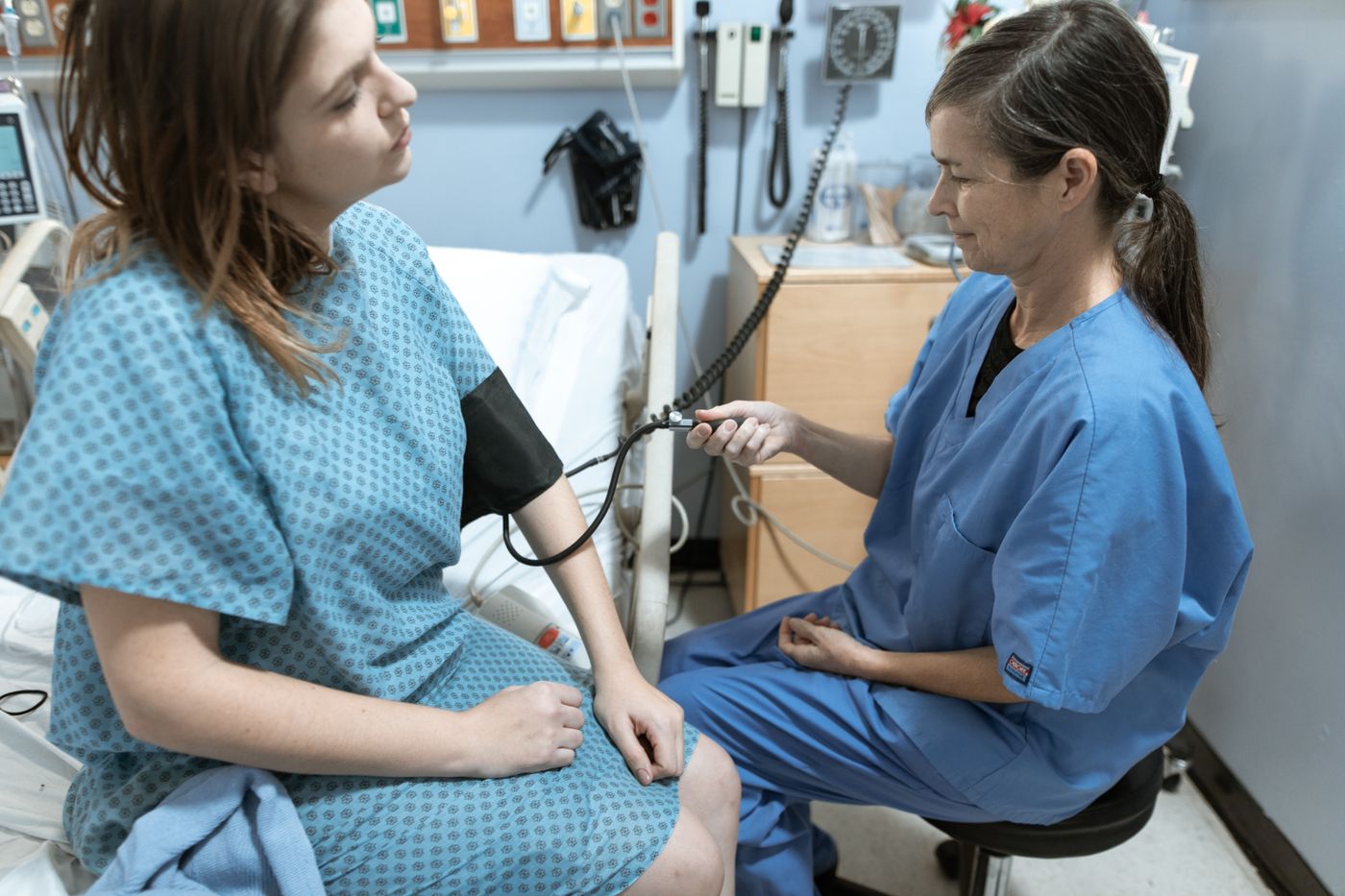
A patient's blood pressure reads 118 over 74. Written alone on a flowsheet, that number looks reassuring, and a busy nurse could be forgiven for moving on. But if that same patient ran 150 systolic all week, and the heart rate that sat in the 70s yesterday is now 105, the "normal" reading is not reassurance. It is a warning shot.
This is the central deception of vital signs: single values lie, and trends tell the truth. Studies of in-hospital cardiac arrest have repeatedly reported that many patients show documented abnormal vital signs in the hours before the event, signs that were recorded, filed, and not acted on. The information was there; the interpretation was not.
This article covers the physiology that makes trends so much more honest than snapshots, the vital sign most likely to warn you first, how early warning scores and nurse intuition fit together, and how to turn recognition into escalation that actually changes the outcome.
Every vital sign is one frame from a moving picture. A snapshot cannot show direction or speed, and direction and speed are exactly what distinguish a stable patient from a deteriorating one. A heart rate of 98 means one thing in a patient who has hovered there for two days, and something entirely different in a patient who was at 70 this morning.
Snapshots also invite the trap of the normal range. Reference ranges describe populations, not people. A young, fit patient can hold textbook-normal numbers while quietly working harder and harder to do so, and an elderly patient on a beta blocker may be physiologically incapable of mounting the tachycardia you are waiting for. The honest question is never "is this number normal?" It is "what is this number doing, and what is it costing the patient to produce it?"
Practically, this means charting is not the end of the task. Before you file a set of vitals, put them next to the last three sets and ask what is moving. That thirty-second habit is one of the highest-yield safety behaviors in nursing, and it is the habit our free vital signs reference sheet is built around.
The body defends its blood pressure the way a bank defends its headline balance: by quietly spending reserves. When perfusion is threatened, by bleeding, sepsis, dehydration, or pump failure, the sympathetic nervous system raises the heart rate and constricts peripheral vessels to keep pressure and core circulation intact. On the flowsheet, this looks like a creeping tachycardia under a stubbornly stable blood pressure.
That stability is the trap. Blood pressure is not a sensitive early marker of deterioration; it is a late one, precisely because the entire compensatory apparatus exists to protect it. By the time pressure falls, compensation has not merely been strained, it has been exhausted. The patient did not suddenly become sick when the pressure dropped. The pressure dropped because the patient had been sick for hours and finally ran out of reserve.
If one vital sign deserves a reputation upgrade, it is respiratory rate. The resuscitation literature has widely reported it as among the most sensitive early indicators of deterioration, and for sound physiological reasons. Breathing rate responds to almost every serious insult: it rises with hypoxia, with the metabolic acidosis of sepsis and shock as the body blows off carbon dioxide to compensate, with pain, with pulmonary embolism, and with early heart failure. It is the body's most general-purpose alarm.
It is also, notoriously, the vital sign most often estimated rather than measured. A respiratory rate charted as "18" shift after shift, in a patient whose other numbers are moving, often reflects habit rather than observation. Counting a full rate takes thirty seconds of watching the chest, and those thirty seconds routinely detect trouble before any monitor does. A patient whose rate has climbed from 14 to 24 is telling you something is wrong, even when every other number still sits in range, and a rate that is falling in an exhausted, struggling patient is more ominous still.
Watch the pattern as well as the number: increasing work of breathing, accessory muscle use, or a patient who can no longer finish a sentence carries meaning that no single count captures.
Because individual clinicians vary in experience and workload, many hospitals formalize trend-watching with early warning scores such as MEWS (Modified Early Warning Score) and NEWS, the National Early Warning Score developed by the Royal College of Physicians in the UK. That NEWS assigns respiratory rate a prominent weighting is itself a useful endorsement of the point made above. The concept is simple: several routine observations, including respiratory rate, heart rate, blood pressure, temperature, and level of consciousness, are each scored by how far they deviate from normal, and the scores are summed. Rising totals trigger defined responses: increase observation frequency, notify the provider, or call the rapid response team.
The real power of these tools is not mathematical sophistication. It is that they convert a nurse's sense that "the numbers are drifting" into an objective, shared number that is difficult to dismiss, and they attach an expected action to it. A score removes the burden of persuasion from the least powerful person in the room. It is worth being clear about their limits, too: a score compresses a patient into a handful of observations, and it will occasionally be bland while the patient is not. Scores are a floor for escalation, never a ceiling.
That limitation is why mature safety systems explicitly honor clinical intuition. Experienced nurses often detect deterioration before the numbers move, through pattern recognition built from thousands of patient encounters: subtle changes in color, effort, behavior, or responsiveness that no flowsheet field captures. This is not mysticism; it is expertise operating faster than articulation.
Rapid response systems in many hospitals formally recognize this by including nurse concern, the plain statement "I am worried about this patient," as a legitimate activation criterion in its own right, independent of any score. The message to every nurse, especially newer ones, is direct: your worry is admissible evidence. You do not need a qualifying number to escalate, and a system that asks you to wait for one has misunderstood what early recognition means.
Recognition only helps the patient if it travels. The reliable path from a worrying trend to a changed plan has four steps: notice the trend, verify it at the bedside with your own assessment, frame it with a score if your unit uses one, and escalate it in a structure the listener can act on.
The formal machinery for that last step is the rapid response system, promoted widely by the Institute for Healthcare Improvement and the subject of ongoing guidance from the Agency for Healthcare Research and Quality. The Joint Commission has likewise expected hospitals to maintain a process for recognizing and responding to changes in a patient's condition. What none of those bodies can specify for you is your own unit's trigger thresholds and call pathway, which vary between facilities: find yours in your local policy and know it before you need it.
The escalation itself belongs in SBAR: situation, background, assessment, recommendation. Lead with the trend, not the snapshot: "heart rate has climbed from 78 to 116 over four hours" is a fundamentally different message than "heart rate 116." Name your concern explicitly, and end with a request and a callback threshold. If the structure is not yet reflex for you, our free SBAR template gives you the scaffold to script the call before you dial.
Rapid response teams exist precisely for the gap this article describes: the patient who is deteriorating but has not yet arrested. Bringing critical care expertise to the bedside on the floor, before transfer or collapse, is their entire purpose. Calling them early is using the system exactly as designed; the call you wonder whether to make is usually the call you should already have made.
Every nurse who hesitates to escalate is running a quiet calculation about how the call will be received. Units where a false alarm earns an eye-roll teach their nurses to wait for certainty, and certainty is a late sign. Units where leaders publicly thank the nurse whose "unnecessary" call turned out fine, and debrief the reasoning rather than the outcome, harvest earlier calls and earlier saves.
Practice is culture's partner. Recognizing compensation, counting a real respiratory rate under time pressure, and delivering a firm SBAR to a skeptical voice on the phone are all rehearsable skills. Deteriorating-patient scenarios are among the most requested programs in our simulation lab, because they let nurses meet the creeping heart rate and the stubborn blood pressure a dozen safe times before the real one, and let whole units drill the escalation pathway as a team.
Which vital sign change should worry me first? A rising respiratory rate, especially when it climbs across consecutive observations. It responds early to hypoxia, acidosis, sepsis, and cardiac stress, which is why the resuscitation literature repeatedly flags it as the earliest and most neglected warning sign. A rising heart rate under a stable blood pressure is a close second.
What if my patient's numbers are all technically normal but I feel uneasy? Act on the unease. Reassess at the bedside, compare against baseline, and voice the concern to your charge nurse or provider. Many rapid response systems accept nurse worry as an activation criterion by itself, and experienced clinicians consistently treat it as meaningful data.
When should I call the rapid response team instead of the provider? Follow your facility's criteria, but the working principle is speed and capability: if the patient needs critical care eyes now, or the provider pathway is slow and the trend is steep, call the team. Rapid response exists for pre-arrest deterioration, and an early call that ends in reassurance is a success, not a misuse.
How do I get better at spotting deterioration before it is obvious? Deliberately review trends every time you chart, count real respiratory rates, and seek out deteriorating-patient simulation. Pattern recognition is built from repetitions, and simulation lets you accumulate them safely, with a debrief that shows you exactly which cue you caught late.
The nurses who catch deterioration early are not luckier; they have simply seen the pattern more times. Wahero Health Institute runs deteriorating-patient scenarios, escalation drills, and SBAR communication practice for nursing programs and hospital teams, in our lab or at your facility. Start with the free vital signs reference sheet, then give your team the repetitions.
Educational content only
This material is published by Wahero Health Institute for professional education and is not individual medical advice, a care protocol, or a substitute for clinical judgment. Always follow your facility's policies, your state's nurse practice act, and your own scope of practice, and confirm medication doses against a current authoritative reference before administration. See our Terms of Use.