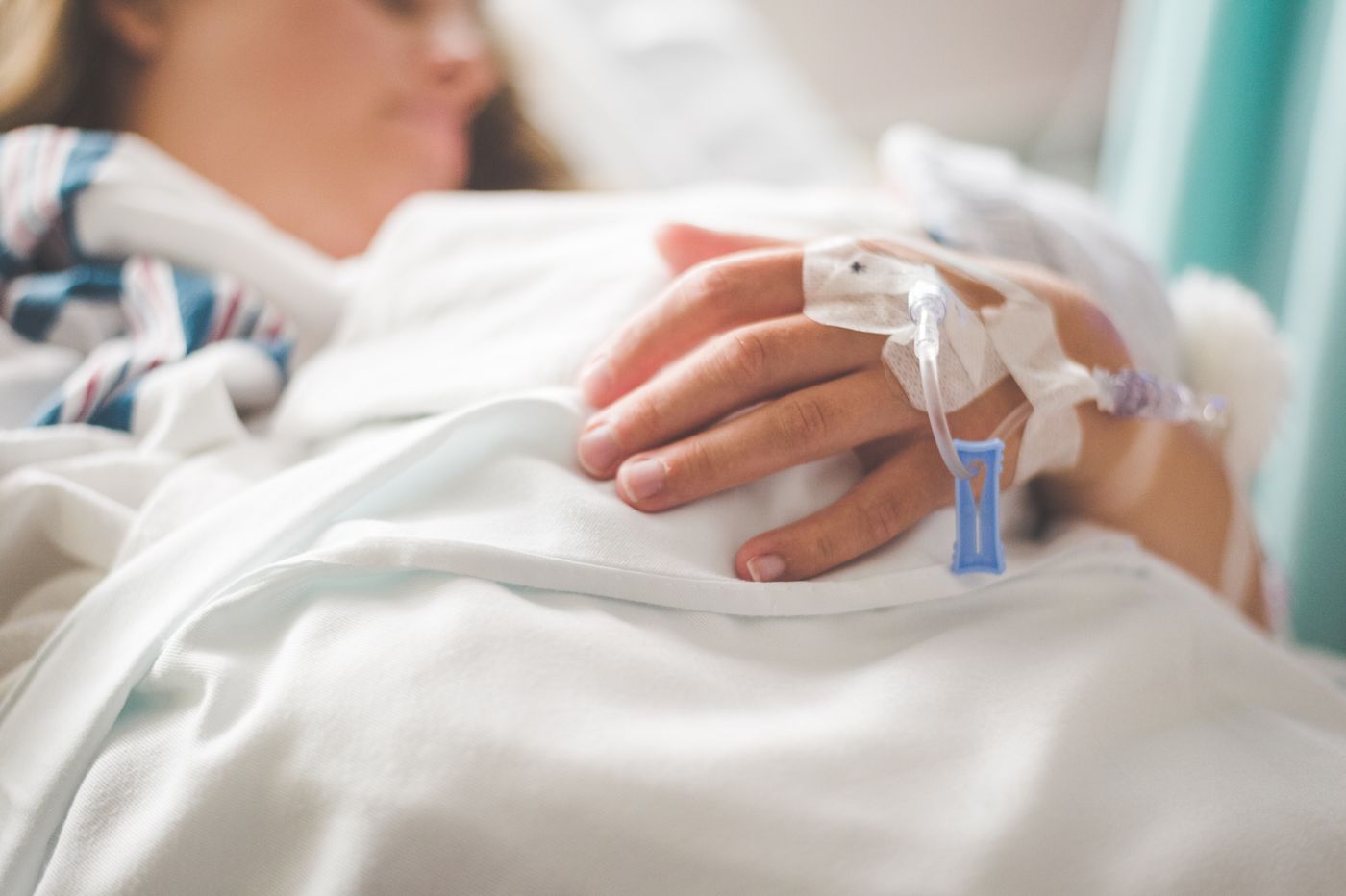
A forearm that looked unremarkable at midnight is puffy at four in the morning. The pump has not alarmed. The patient calls the site tight rather than painful. Nothing about the moment announces itself as an emergency, and that is exactly the difficulty: by the time an infusion complication looks dramatic, most of the tissue injury it will cause has already occurred.
Infiltration is among the most common complications of peripheral intravenous therapy, and for most infusions it is an inconvenience rather than a catastrophe. Extravasation is a different animal. When the leaked solution is a vesicant, the Oncology Nursing Society and the Infusion Nurses Society both treat it as a potentially disfiguring injury, up to full thickness tissue loss and surgical repair. Two events that begin identically at the skin can end in completely different places.
This article is standards-anchored education, not bedside instruction. It covers how the Infusion Nurses Society Standards of Practice define these two events, the physiology behind them, the staging scales used to grade what an assessor sees, what the standards say about assessment frequency and documentation, why site selection and securement dominate prevention, and how programs teach and test this competency.
Watch the short version on our educator's own channel, Spice to health$Nursevibes: Quick Guide: What to Do If Your IV Infiltrates. The article below expands on it with the published standards behind the practice, and with how the skill is assessed.
The Infusion Nurses Society draws the distinction on a single variable: what leaked. Infiltration is the inadvertent administration of a non-vesicant solution or medication into surrounding tissue. Extravasation is the inadvertent administration of a vesicant, meaning an agent capable of causing tissue blistering, sloughing or necrosis when it escapes the vessel.
The picture at the moment of discovery is often the same in both: swelling, taut or shiny skin, coolness relative to the opposite limb, discomfort. What differs is what happens next in the tissue, and therefore how urgently the event has to be recognized, escalated and documented.
This is why vesicant awareness is treated as a knowledge requirement rather than a reaction. The Institute for Safe Medication Practices publishes a list of vesicant medications to help organizations identify which agents warrant heightened precautions, and the Oncology Nursing Society's chemotherapy and immunotherapy guidelines classify antineoplastic agents by vesicant potential. Under both, the decision that matters is made before the infusion starts.
A peripheral catheter sits inside a thin walled, mobile vessel crossed by joints and constantly deformed by the patient's own movement. Failure is the expected end state of a peripheral line, not an aberration. The useful question is which mechanism produced it.
Mechanical dislodgement is the most intuitive: the catheter tip backs partly out of the vein, or pistons through the vessel wall, because the hub was not held still. Movement at the insertion site, particularly across the wrist or antecubital fossa, applies leverage to a device that tolerates very little. This is the mechanism securement exists to defeat.
Vessel wall injury is the slower mechanism. Repeated puncture attempts, a catheter that fills too much of the vessel lumen, and infusates whose pH or osmolarity differs sharply from blood all irritate the endothelium. The Infusion Nurses Society Standards of Practice address this by tying device and site selection to the characteristics of the prescribed therapy. An inflamed, fragile vessel leaks around a catheter that is technically still in the right place.
Vesicants injure tissue by a mechanism that does not stop when the infusion stops. The Oncology Nursing Society distinguishes agents that bind to tissue nucleic acids, causing injury that persists and spreads as the drug is recycled through dying cells, from agents that do not bind and are metabolized locally. That distinction explains why an extravasation can look trivial on day one and declare itself over the following weeks.
It also explains why the response to a suspected extravasation is protocolised rather than improvised. Where an antidote or specific thermal application exists, it is agent specific, time sensitive, and defined by the organization's own policy with pharmacy. Those directives are deliberately outside the scope of an article like this one, and any nurse administering vesicants should know where the facility's extravasation protocol lives before the first dose is hung.
The standards therefore push the workload upstream. The Infusion Nurses Society links vascular access device selection to the vesicant potential, pH and osmolarity of the prescribed infusate, and the Oncology Nursing Society sets expectations for how vesicant administration is monitored.
Consistency of language is a safety feature. The Infusion Nurses Society publishes an infiltration scale that grades the event from 0 through 4, anchored to observable findings: the extent of edema, skin appearance and temperature, pain, and at the top of the scale, evidence of circulatory impairment. The scale exists so that "the site looks bad" becomes a graded observation another clinician can compare against later.
Two design features matter. The scale is anchored to what is visible, not to how much fluid is presumed to have leaked, because leaked volume cannot be measured at the bedside. And successive editions of the Standards treat extravasation assessment separately rather than as a high infiltration grade, reflecting that vesicant injury evolves and needs its own follow up.
Ask most nurses what the standards say about checking an IV site and you will hear a number. The standards are more careful than that. The Infusion Nurses Society frames assessment frequency as a function of risk: the patient's ability to report symptoms, the care setting, the device type, and above all what is infusing. A continuous vesicant infusion in a sedated patient and a saline lock in an alert adult do not warrant the same cadence.
What the standards do require universally is that a frequency is defined, that the organization defines it in policy, and that assessment actually occurs and is recorded. Patients who cannot report symptoms, including sedated, cognitively impaired, very young and critically ill patients, are consistently identified as warranting heightened surveillance, because the earliest warning in a communicative patient is the patient.
Documentation carries more weight here than learners expect. The American Nurses Association's standards of professional practice make accurate, timely documentation part of practice itself, and The Joint Commission requires accredited organizations to maintain complete and accurate records of care. A site described the same way by three nurses across three shifts is a trend; three different descriptions are noise.
If prevention had a center of gravity, it would sit well before the swelling. Two decisions do most of the work.
The first is site and device selection. Areas of flexion put the catheter under repeated mechanical stress, and both the Infusion Nurses Society Standards and the Michigan Appropriateness Guide for Intravenous Catheters, published in Annals of Internal Medicine, steer clinicians toward a site and device suited to the duration and nature of the prescribed therapy. Vessel health and preservation, the principle that today's access decision determines what access is available next admission, is now explicit in infusion practice rather than assumed.
The second is securement. A catheter that cannot move cannot piston, and an insertion site that stays visible can be assessed. The Infusion Nurses Society addresses securement and dressing integrity as a standard in its own right, and the CDC's guidance on preventing intravascular catheter-related infections treats an intact, clean, transparent dressing as basic practice, in part because it keeps the site under observation.
Patient participation belongs in the chain too. An oriented patient told plainly what to report, including tightness, burning, stinging or swelling, becomes a monitor between scheduled checks, and patient education is itself a documented nursing intervention under the American Nurses Association's standards.
Knowing the definitions is the easy part. Programs that assess this well test four separable things, and a learner can be strong in one and weak in another. The first is recognition: can the learner describe a site accurately, comparing it to the opposite limb, and assign a grade another clinician would agree with? Inter-rater agreement is the whole point of a scale, so assessors commonly have two learners grade the same simulated site independently and compare.
The second is anticipation. Given a prescribed infusion, can the learner say whether it carries vesicant risk, and what that implies for device and site selection? Here the Institute for Safe Medication Practices vesicant list and the organization's formulary become tools a learner is expected to use rather than facts to memorize.
The third is process compliance: securement, dressing integrity, assessment frequency and documentation, checked against the facility's policy rather than the assessor's habits. The fourth is escalation, a communication competency as much as a clinical one, usually carried by structured handover in SBAR form. Our guides to IV insertion competency and the free IV therapy checklist cover the surrounding skills.
Simulation is where the four combine under time pressure. The INACSL Healthcare Simulation Standards of Best Practice set out how such scenarios should be designed and, critically, debriefed, because the debrief is where a learner discovers which cue they saw and dismissed. A scenario that stages a slowly swelling forearm during a busy assignment tests what a written exam cannot: whether the learner still performs the scheduled assessment when nothing appears wrong. That is the behavior our simulation lab sessions rehearse.
These are deliberately short. Each one gives you the findings and nothing else, because that is the situation you are actually in when you look at an arm. Decide before you open the answer.
More of these, in full NCLEX format with worked rationales, are free in our IV and NG practice questions.
What is the difference between infiltration and extravasation? Infiltration is the leakage of a non-vesicant solution into the tissue around the vein; extravasation is the leakage of a vesicant, an agent that can blister, slough or kill tissue. The Infusion Nurses Society defines them this way. The signs at the skin can be identical, so the classification depends on knowing what was infusing.
Does a blood return prove the catheter is still in the vein? No, and teaching that it does is a known error. A blood return is one data point among several. Standards frame site assessment as a composite of appearance, temperature, patient report and device function, which is why assessors mark the whole assessment, not the flush alone.
How often should a peripheral IV site be assessed? The Infusion Nurses Society sets frequency by risk rather than issuing one universal number: the patient's ability to report symptoms, the setting, the device and the infusate all change the answer. Your organization defines the interval in policy, and that policy, not a figure from an article, is the one you follow.
Why are these events more dangerous in some patients? Because the earliest warning is usually the patient's own report of tightness, burning or stinging. Sedated, cognitively impaired, very young and critically ill patients cannot provide it, so surveillance has to replace self-report.
Is this examinable content for nursing students? Yes. Recognizing infusion complications, prioritizing the response and escalating appropriately are recurring themes in NCLEX-style clinical judgement items, which the NCSBN's clinical judgement measurement model frames around noticing cues and taking action. Facilities also include it in annual IV therapy competency validation.
Nurses who catch an infiltrating line early are not more observant by temperament. They have practiced the assessment enough times that they still perform it on the twelfth quiet check of a busy shift. Wahero Health Institute runs IV therapy and infusion complication competency sessions for nursing programs and facility teams, built around the current Infusion Nurses Society Standards and your own policies.
Educational content only
This material is published by Wahero Health Institute for professional education and is not individual medical advice, a care protocol, or a substitute for clinical judgment. Always follow your facility's policies, your state's nurse practice act, and your own scope of practice, and confirm medication doses against a current authoritative reference before administration. See our Terms of Use.