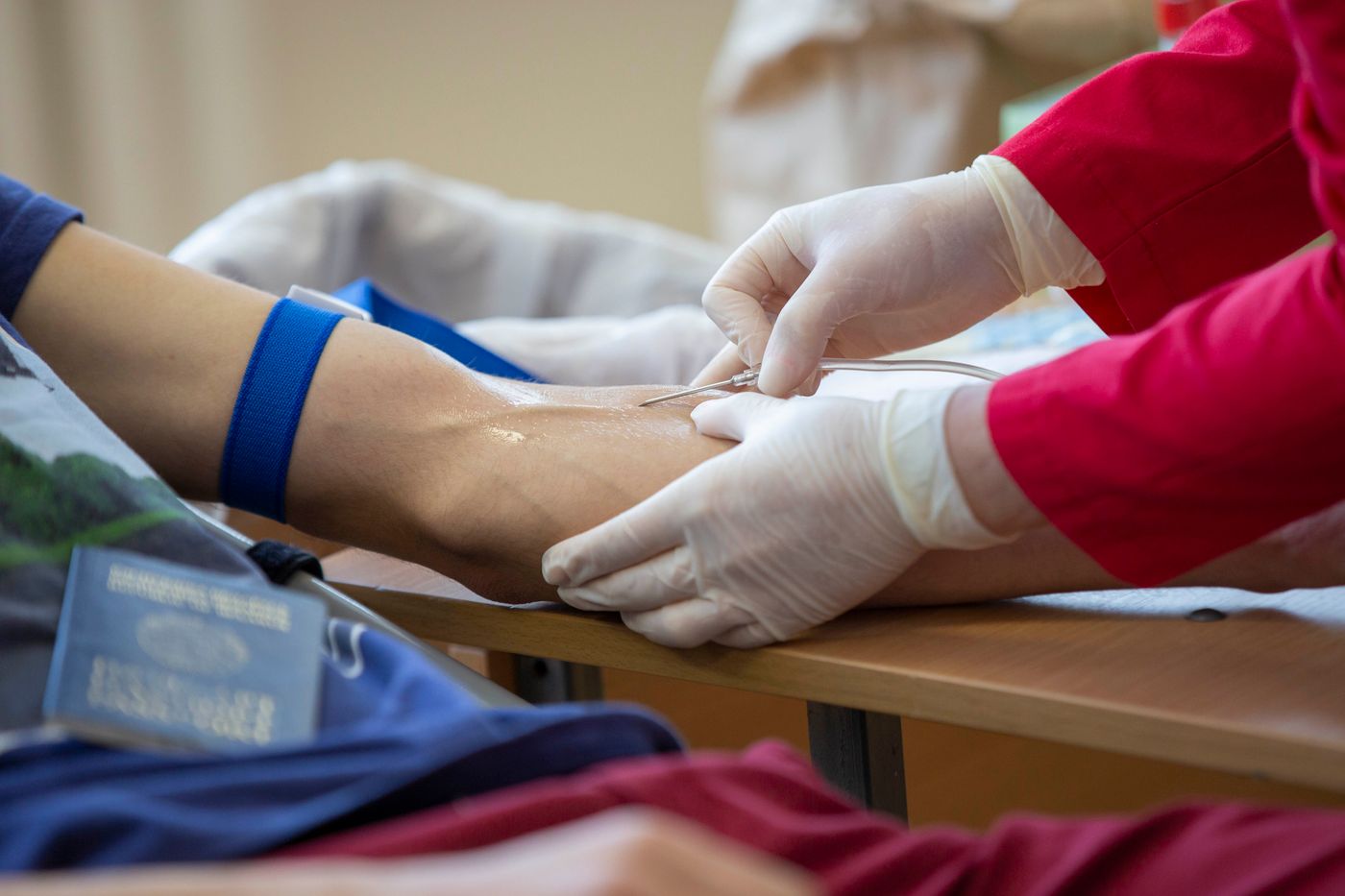
Ask any experienced nurse about their first IV attempts and you will hear the same story: shaking hands, a patient watching every move, and a vein that seemed to vanish the moment the catheter touched skin. Peripheral IV insertion is among the most common invasive procedures in healthcare, performed millions of times each year, and it is also one of the most anxiety-producing skills for students and new graduates.
Here is the encouraging part. Success with IVs is not a talent you are born with. It is a chain of small, learnable decisions, and most failed attempts can be traced to a specific weak link in that chain. Fix the weak links and your success rate climbs.
This article is about what competency in that skill actually consists of: which decisions carry the most weight, why they fail, and how a skills programme builds and validates them. It is a map of the territory before you walk it, not a substitute for supervised hands-on training. The specific technique, the angles, the depths and the sequence, is taught at the bedside and in the skills lab by an instructor who can watch your hands and correct them, which is the only way procedural skill is safely acquired. Your own facility's policy and the standards in force where you practice govern how the procedure is performed.
When we debrief learners after unsuccessful sticks, the needle itself is rarely the problem. The attempt usually fails before or immediately after skin puncture, in one of a handful of predictable ways: a poorly chosen vein, inadequate anchoring that lets the vein roll, an angle that transfixes the vessel, or threading the catheter before the tip is truly inside the lumen.
That pattern matters because each cause has its own fix. If you know which link in your chain breaks most often, you know exactly what to practice next. The figure below shows the way we categorize missed attempts in teaching sessions.
Notice what dominates that chart. More attempts are lost at site selection than at any other step, which means the highest-yield skill in IV insertion involves no needle at all.
Slow down and palpate. A good vein feels spongy and resilient, refills quickly when compressed, and runs straight for at least the length of the catheter. The forearm is usually your best territory: veins there are supported by muscle, splinted by bone, and away from joints, so the line survives patient movement. Hand veins are visible but fragile and painful. The antecubital fossa looks tempting, yet a line in a flexing elbow occludes constantly and often fails within a day.
Train your fingertip, not your eyes. Many excellent veins are invisible, and many visible veins are thready surface vessels that will blow. Close your eyes while palpating if it helps you concentrate on depth, direction, and diameter.
A flat, empty vein is not a dead end, and knowing why is part of the competency. Venous filling responds to four things: pressure, gravity, warmth, and muscle activity. A tourniquet obstructs venous return while arterial flow continues, a dependent limb fills under gravity, muscle activity pushes blood into the superficial system, and local warmth dilates surface vessels. Learners who understand those four levers stop treating a poorly filled vein as bad luck and start treating it as something they can influence.
Two cautions belong to the same body of knowledge. Mechanical trauma triggers venospasm, so a vein that is struck narrows exactly when it needs to be widest. And prolonged tourniquet time is its own problem, which is why unhurried selection means releasing and resetting rather than persisting. The specific placement, tension and timing are matters for your facility's protocol and your instructor, not for an article.
The rolling vein that frustrates every beginner is usually an anchoring problem wearing a disguise. Veins sit in loose subcutaneous tissue, and unless they are fixed in place the needle tip pushes them aside instead of entering them.
This matters for how you learn, not just for what you do. When a learner reports that a vein "moved," the productive response in a debrief is almost never to discuss vein choice. It is to look at traction. Skills instructors watch the non-dominant hand at least as closely as the dominant one, because stabilisation is doing three jobs at once: immobilising the vessel, straightening its path, and tensioning the skin. Learners who believe the skill lives entirely in the needle hand plateau early.
Puncture fails in two opposite directions, and recognising which one happened is the difference between improving and repeating. Too steep an entry carries the needle through the back wall, a transfixation that produces immediate haematoma. Too shallow drags painfully through dermis without reaching the vessel. Correct entry varies with the depth of the specific vein, which is precisely why it is taught with an instructor's eyes on your hands rather than from a number in an article.
The second failure mode is subtler and accounts for a great many "I had flashback and still lost it" attempts. Blood in the chamber confirms the needle tip is in the lumen, but the catheter sits behind the tip and may still be outside the vessel. There is a short sequence between flashback and threading that closes that gap, and skipping it is the single most common reason a promising attempt fails. Your instructor will teach the sequence and watch you perform it; what you should take from reading is simply that flashback is not the finish line.
Communication feels like a soft skill until you watch what it does to veins. An anxious patient mounts a sympathetic stress response: peripheral vessels constrict, muscles tense, and the arm you carefully positioned starts to move. A calm, informed patient holds still and keeps better peripheral filling.
Narrate simply: "You'll feel a pinch, then pressure. I'll tell you before anything happens." Speaking slowly has a second benefit that surprises new nurses. It regulates your own breathing and steadies your hands. Confidence is contagious in both directions, and the version of you the patient sees is the version your hands believe.
Professional guidance in infusion therapy, including the Infusion Nurses Society standards, converges on a simple discipline: limit unsuccessful attempts, commonly to two, then hand off to a colleague with more experience or better tools. Many facilities encode a specific limit in policy, so the number that binds you is the one in your own institution's document rather than any figure quoted online. The CDC's guidance on preventing intravascular catheter-related infection sits alongside it, since every additional puncture is another potential portal of entry.
This is not an admission of failure. Every additional attempt consumes a vein the patient may need for weeks of therapy, increases pain and anxiety, and raises the likelihood that the eventual line goes into a worse site. Escalating early is patient advocacy, and the nurses most respected on any unit are the ones who ask for help at the right moment rather than the last moment.
Motor skills consolidate through repetition with feedback. The research on deliberate practice is consistent on this point: performance improves fastest when learners repeat a specific sub-skill, get immediate correction, and repeat again. The bedside is a terrible place to buy those repetitions, because every miss has a human cost. Task trainers and simulation labs make repetitions nearly free.
The goal of that practice is automaticity. When the mechanics of the sequence run without conscious effort, your working memory is free for the things that cannot be scripted, like the patient in front of you. That is what a skills validation is really testing: not whether you can recite the steps, but whether performing them still consumes your whole attention.
Learners tend to assume a skills validation is scored on the puncture. It is not, or at least not mainly. An assessor is watching preparation: whether the order was verified and the patient identified, whether the vein was chosen by palpation rather than appearance, whether the limb was prepared, whether every supply including flush and dressing was within reach before anything began, and whether stabilisation held. Most of a validation is decided before the catheter leaves its packaging.
That is the quiet truth of IV insertion, and of most procedural skills in nursing. Experts are not faster at the dramatic part. They are more disciplined about the boring part, and the dramatic part becomes routine as a result. It is also why an honest programme ends in a validation performed under observation rather than a certificate for attending.
How is gauge selection taught? As a matching problem rather than a habit: the smallest gauge that accomplishes the prescribed therapy is generally gentler on the vessel and lasts longer, while rapid infusion and blood products need larger bores and correspondingly better veins. The selection appropriate to a given patient and therapy is a clinical decision made with your preceptor and your facility's guidance.
Why is "I had flashback but it would not thread" so common? Because flashback confirms the needle tip is in the lumen while the catheter still sits behind it. Understanding that anatomy explains the whole failure mode, and it is why instructors treat the moment after flashback as a distinct step rather than part of the puncture. The technique for closing that gap is taught hands-on.
How do I handle patients who are afraid of needles? Name the fear, give control, and shorten the wait. Tell them exactly what will happen, agree on a signal if they need a pause, and do not leave them staring at prepared supplies. Fear peaks in anticipation, so an organized, prompt procedure is itself an anxiety intervention.
How many practice attempts before I am competent? There is no magic number, and learners progress at different rates. What matters is structured repetition with feedback until your success is consistent, which is why our courses end with a formal skills validation rather than a simple attendance certificate.
Does ultrasound guidance replace these fundamentals? No, it extends them. Ultrasound is transforming access for patients with difficult veins, and many units now train nurses in ultrasound-guided placement. But the machine only shows you the vein. Stabilisation, control at puncture, the handling of that moment after flashback, and attempt limits still decide whether the catheter ends up where the image says it should. The fundamentals come first; the technology then multiplies them.
Reading builds understanding. Reps build skill. Our IV Therapy Fundamentals course packs demonstration, hands-on practice, and skills validation into four focused hours, and our mobile training service brings the entire course to your facility or nursing program. You can also start today with our free IV insertion skills checklist.
Educational content only
This material is published by Wahero Health Institute for professional education and is not individual medical advice, a care protocol, or a substitute for clinical judgment. Always follow your facility's policies, your state's nurse practice act, and your own scope of practice, and confirm medication doses against a current authoritative reference before administration. See our Terms of Use.