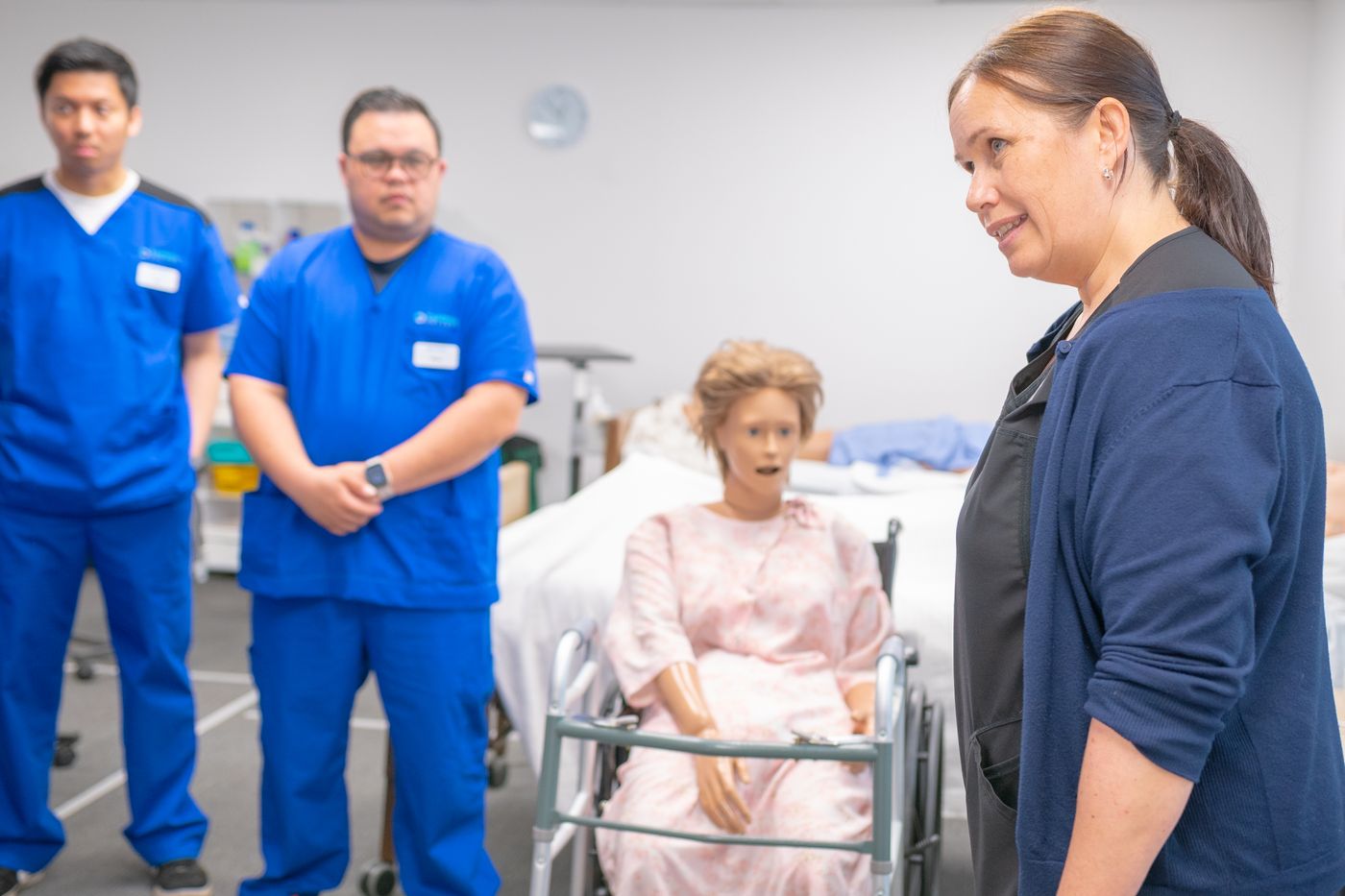
It is 2:15 on a Tuesday afternoon, and an educator wheels a manikin into an empty room on a medical floor. Within four minutes the team has found three things nobody knew: the emergency cart key is not where the unit binder says it is, the overhead page for the response team does not carry into the far end of the hallway, and two travel nurses on shift have never seen this unit's version of the documentation screen. No patient was involved. Nothing went wrong. That is the point.
This is in-situ simulation: simulation that happens in the real clinical space, with the real team, using the real equipment and processes. For a facility, it can be one of the most efficient training investments available, because it trains people and tests the system at the same time. It can also go badly. A scenario dropped on a short-staffed unit without planning can disrupt care, frighten staff and teach the wrong lesson.
This guide is written for nurse educators, clinical managers and quality leaders who want to run on-unit simulation as a program rather than a one-off event. It covers how to decide what to simulate, the safety and logistics rules that protect patients, how to keep the experience psychologically safe, and how to make sure the problems you uncover actually get fixed.
Lab-based simulation takes learners out of the workplace into a controlled environment. That is the right setting for building individual skills from scratch, for practicing something repeatedly, and for assessment where conditions must be standardized. If you want to compare the two, our article on what happens in a simulation lab describes the lab side in detail.
In-situ simulation earns its place for a different reason. Because it runs where care actually happens, it exposes the gap between how a process is written and how it really works on a given unit, on a given shift, with the people who are actually there. The patient safety literature calls these hidden weaknesses latent safety threats: conditions in the system, such as missing equipment, unclear roles or confusing workflows, that have not yet caused harm but could. A 2023 systematic review by Grace and O'Malley in Simulation in Healthcare, summarized by the Agency for Healthcare Research and Quality's Patient Safety Network, looked at 15 studies of in-situ simulation in emergency departments and found that the threats identified most often related to equipment and to team communication.
So in-situ simulation has two jobs at once: team training (communication, role clarity, leadership, escalation behavior) and system testing (space, equipment, alarms, staffing and process). A well-planned program decides in advance which job each session is mainly doing, because the objectives and the debrief look different for each.
It is not the place to teach a brand-new skill under pressure or to test an individual for their personnel file. Mixing those goals into a drill makes staff defensive.
The most common planning mistake is to start with a favorite scenario and then look for a reason to run it. The International Nursing Association for Clinical Simulation and Learning (INACSL) sets out the opposite order in its Healthcare Simulation Standards of Best Practice. The first criterion of the Simulation Design standard is a needs assessment, which provides the evidence that a simulation is needed in the first place.
INACSL lists the kinds of sources a needs assessment can draw on: analysis of underlying causes (such as a root cause or gap analysis), organizational analysis, surveys of staff and educators, outcome data from earlier simulations or aggregate health care data, and standards from accrediting and regulatory bodies. For a facility, that translates into questions like these:
The output is a short, ranked list of problems, each with an owner and a reason. That list becomes your scenario pipeline, and your justification when you ask a manager for an hour of the unit's time.
Not every training need suits the unit floor. The grid below is a practical way to sort candidates. It is a planning aid, not a published standard, so adapt the criteria to your facility.
| Candidate need | Best setting | Why |
|---|---|---|
| Response to a rare, high-risk event on a specific unit | In-situ | Tests that unit's equipment, layout, call systems and team roles |
| Opening a new unit or moving into a renovated space | In-situ (before patients arrive) | Finds layout and equipment problems while they are still cheap to fix |
| New equipment or a new workflow going live | In-situ, after lab familiarization | Checks that the process works in the real space with real staffing |
| Interprofessional communication and handoffs | Either | In-situ adds realism; the lab adds time and privacy for debrief |
| Learning a new hands-on skill for the first time | Lab | Needs repetition and a protected setting |
| Formal competency validation for individual staff | Lab or skills fair | Needs standard conditions and documented criteria |
For the individual competency side, our guide to building a competency validation program covers methods and documentation. Keep the two programs linked, but separate: what a team learns on the unit can feed the topics you choose for validation, without turning every drill into a test.
In-situ simulation happens next to real patients, so the program needs written safety rules before the first session. These are organizational controls, and your own facility's policies and risk management team should shape the final version.
A go or no-go check. Before every session, the charge nurse or house supervisor confirms the unit can safely spare the people and the space. Agree in advance what cancels a session: census, acuity, staffing shortfalls or an active emergency elsewhere. Cancelling should be easy and blame-free. A program that pressures units into running drills on bad days will lose trust quickly.
Keep simulation supplies out of the patient supply chain. This is not a theoretical risk. In 2015, the Centers for Disease Control and Prevention's Morbidity and Mortality Weekly Report described adverse events in patients who received simulation intravenous fluids, products intended only for training manikins, after the U.S. Food and Drug Administration had issued an alert in December 2014 warning clinicians not to use simulated IV products in patients. Treat every training supply as a safety hazard: label it clearly, store it separately, count it in and count it out, and never borrow a training item back into patient care.
Do not take live equipment out of service. If a scenario uses the unit's real emergency cart or monitor, agree who checks and restores it before the team leaves. Many programs use a dedicated training cart instead.
Tell people what is happening. A sign on the door, a word to patients in neighboring rooms and an agreed phrase such as "this is a simulation" on any call or page stop a drill being mistaken for a real emergency.
Staff on their own unit, in front of their own colleagues, often feel more exposed than they do in a lab. If the first drill feels like a public test, attendance and honesty drop from the second one onward. INACSL's standards on prebriefing and debriefing exist precisely to prevent that. Our article on psychological safety in simulation covers the principles in depth; on the unit, a few practical choices matter most.
The debrief is where most of the value is created, and our guide on why simulation debriefing matters explains the structured approaches facilitators use. On the unit, debriefs are often shorter, so use a consistent structure and capture systems findings separately from the learning conversation.
Then comes the step most programs skip: fixing what was found. A latent safety threat that is identified in a drill and then forgotten is arguably worse than one never found, because staff learn that raising problems changes nothing. Keep a simple log for every session and review it at a standing meeting with someone who has authority to act.
| Log field | Example entry |
|---|---|
| Date, unit and scenario | 3 West, team response drill, day shift |
| Threat found | Emergency cart key not at documented location |
| Category | Equipment, communication, space, staffing, process or policy |
| Owner | Unit manager, with materials management |
| Fix and due date | Relocate key, update unit binder, within two weeks |
| Recheck | Confirm at the next scheduled session |
Routing findings into your facility's existing quality and patient safety processes, rather than holding them inside the education department, is what turns simulation into a safety tool that leaders will keep funding.
A sustainable program needs a small core team: a simulation lead (often a nurse educator), one or two trained facilitators per participating department, a link to quality or risk management, and an executive sponsor who can remove obstacles. Facilitator skill matters more than equipment. A low-cost manikin with a skilled debriefer will usually teach more than an expensive one with a poor debrief, a point our article on what simulation fidelity buys develops further.
Start small and expand on evidence. The phased plan below is illustrative only, to show the shape of a sensible first year rather than a required pace.
Keep sessions short enough that a unit can absorb them: a short session that happens beats a long one that keeps being cancelled. Our guide to budgeting an in-house simulation program covers the cost side, including facilitator time, which is usually the largest line.
What is the difference between in-situ simulation and a mock code? A mock code is one type of in-situ simulation, focused on an emergency response. In-situ simulation is the broader approach of running any scenario in the real clinical environment with the real team, including handoffs, new equipment rollouts and tests of a new unit before it opens.
Should in-situ simulations be announced or unannounced? Both are used. Announced sessions are easier to staff and usually feel safer for participants, so many programs start there. Unannounced sessions can reveal how the system performs under real conditions, but they need strong safety rules, leadership support and established trust. Decide locally, with frontline staff involved.
Can in-situ simulation count toward annual competency requirements? Sometimes, but it depends on your facility's policy and whether the session used defined criteria and documentation. Many programs deliberately keep in-situ drills separate from individual competency validation so staff feel free to make and discuss mistakes. Check with your education and accreditation leads before counting any session.
What is a latent safety threat? It is a hidden weakness in a system, such as missing or misplaced equipment, an unclear role, a confusing process or a communication gap, that has not yet caused harm but could. In-situ simulation is valued because it can surface these threats before a real patient is affected, as reviews summarized by AHRQ's Patient Safety Network describe.
How do we stop simulation supplies reaching patients? Label every training item clearly as not for patient use, store training supplies apart from clinical stock, count items in and out of each session, and never return training items to clinical areas. The CDC and FDA have both documented harm when simulation IV fluids were given to patients, so treat this as a core safety control.
Wahero Health Institute designs and delivers simulation-based training for Texas facilities, on site and in our lab. We can help you run a needs assessment, train your facilitators in prebriefing and debriefing, and pilot in-situ sessions on your own units. Explore our simulation lab, see how we bring training to facilities through our services and live training, or contact us to plan a pilot.
Educational content only
This material is published by Wahero Health Institute for professional education and is not individual medical advice, a care protocol, or a substitute for clinical judgment. Always follow your facility's policies, your state's nurse practice act, and your own scope of practice, and confirm medication doses against a current authoritative reference before administration. See our Terms of Use.