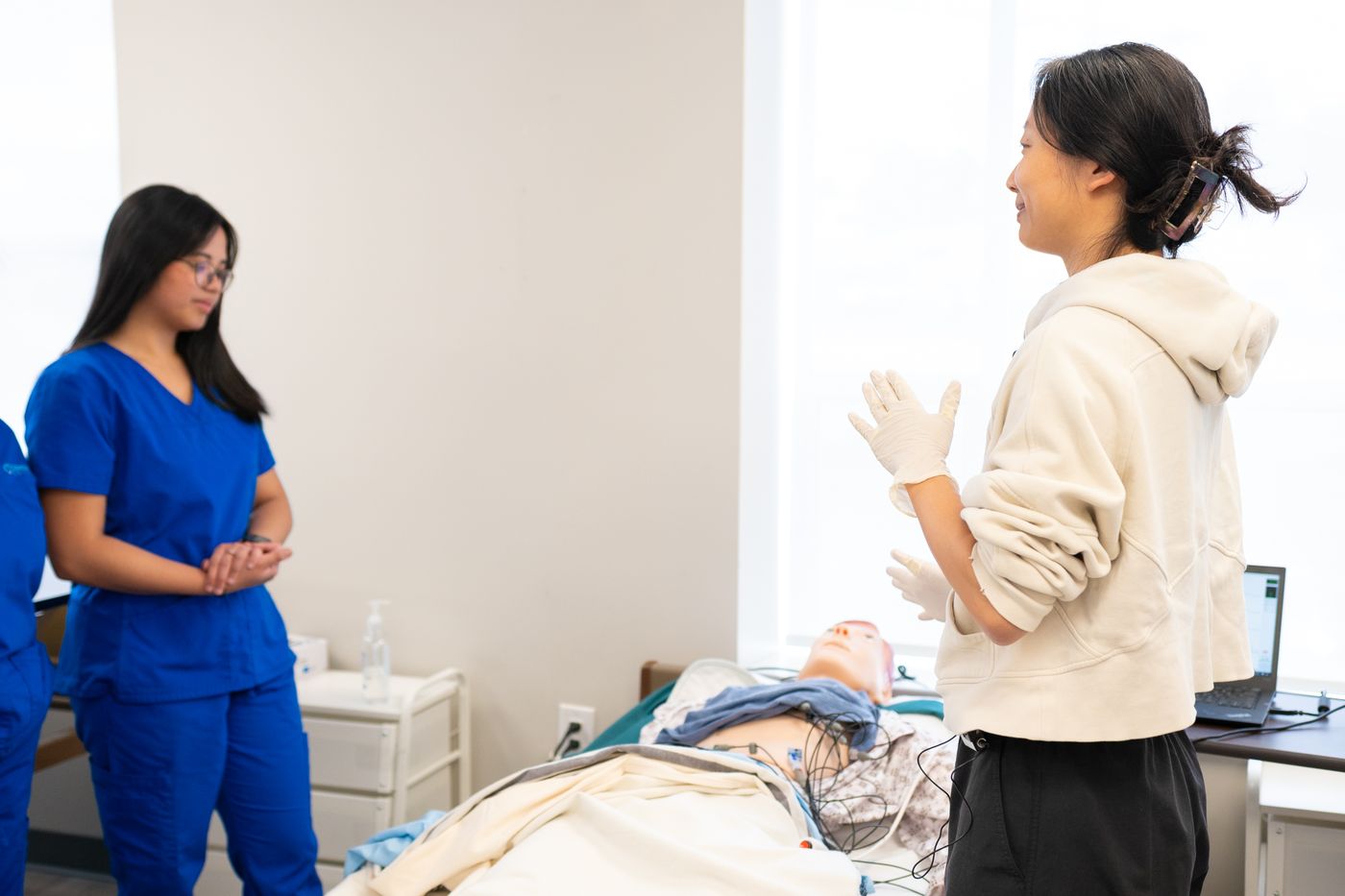
The manikin was booked, the room was set, and six new graduates were waiting outside. Twenty minutes later the session had gone sideways. One learner froze because she did not know whether she was allowed to call the charge nurse. Another kept asking whether the simulator's chest was "really" rising. The facilitator improvised cues no one had planned, and the debrief turned into a list of everything the group did wrong. Nobody could say what the scenario had been meant to teach.
That session did not fail because of the equipment. It failed on paper, before anyone walked into the room. A simulation scenario is a lesson plan with a script, and like any lesson plan its quality is set by decisions the writer makes in advance: what the learners need, what they should be able to do afterward, how they will be prepared, and how the learning will be drawn out at the end.
This guide walks nurse educators, preceptors and staff development leads through writing a scenario that holds up, using the International Nursing Association for Clinical Simulation and Learning (INACSL) Healthcare Simulation Standards of Best Practice as the frame. It focuses on design and teaching method. The clinical content of any scenario must come from your own institution's current policies and subject-matter experts.
INACSL publishes ten Healthcare Simulation Standards of Best Practice: Professional Development, Prebriefing, Simulation Design, Facilitation, The Debriefing Process, Operations, Outcomes and Objectives, Professional Integrity, Simulation-Enhanced Interprofessional Education, and Evaluation of Learning and Performance. In 2025, INACSL published revised versions of four of them (Prebriefing, Facilitation, The Debriefing Process and Professional Integrity) in the journal Clinical Simulation in Nursing, volume 105. If your program's scenario template was built from the older 2016 or 2021 wording, it is worth checking against the current versions.
The Simulation Design standard, published in 2021, is the backbone of scenario writing. It sets out eleven criteria. Paraphrased, they are:
Notice the order. The scenario itself is criterion five. Four decisions come before you write a single line of case history, and the most common design failures trace back to skipping them.
A needs assessment answers one question: what can these learners not yet do that a simulation is the right way to teach? Sources include incident and near-miss themes, competency validation results, preceptor feedback, new graduate self-assessments, accreditation findings, and course evaluations. For a facility, it may be a pattern such as delayed escalation on night shift or confused handovers during transfers.
Write the gap as a sentence before you write anything else. "New graduates on the medical-surgical units report uncertainty about when and how to escalate a concern to the charge nurse" is a gap. "We should do a sepsis sim" is a topic. A gap tells you what to measure; a topic tells you only what to buy. If the gap is purely knowledge, a case discussion may serve better than a full simulation, and saying so is part of good design.
INACSL's Outcomes and Objectives standard recommends writing objectives in the SMART format: specific, measurable, achievable, realistic and time-phased. In practice, that means every objective should name an observable behavior that a facilitator could see or hear during the scenario.
Compare "Understand teamwork" with "During the scenario, the learner communicates a change in the patient's status to the charge nurse using the SBAR structure." The second can be observed, scored and debriefed. Limit a single scenario to two to four objectives. Every extra objective dilutes the debrief, because facilitators can only explore a few threads in depth.
Build each objective on what learners already know. A scenario for second-semester students should not hinge on knowledge they have not been taught; one for experienced nurses can add complexity, distraction and competing priorities. Our guide to what happens in a simulation lab describes how the experience feels from the learner's side, which is a useful check on whether your objectives are pitched right.
Now write the scenario. Every element should exist because an objective needs it. If a detail does not create an opportunity to meet or miss an objective, it is noise that will distract learners and complicate the debrief.
Choose the modality and fidelity on purpose. A communication objective may be met best with a trained standardized patient or family member; a teamwork objective may need a full room with roles. The Simulation Design standard asks you to consider the different kinds of fidelity, physical, conceptual and psychological, rather than assuming that more technology means more learning. Our article on what simulation fidelity actually buys and our explainer on standardized patients go deeper.
Plan the cues. Decide in advance what information learners receive, when, and from whom: a monitor change, a family member's question, a phone call. Write a lifesaver cue for when the group is stuck, such as a confederate nurse who asks a prompting question, so the facilitator is not inventing help on the spot.
Have the clinical content reviewed. The patient details, expected findings and any expected nursing actions in your scenario must be checked by a qualified subject-matter expert against your organization's current policies and the most recent evidence. That review is criterion one of the design standard, and it is what keeps a scenario from teaching outdated practice with great realism.
INACSL's revised 2025 Prebriefing standard describes prebriefing as ensuring learners are prepared for the educational content and aware of the ground rules for the experience. It has two parts. Preparation is anything learners review beforehand: background reading, a policy, a skills video. Briefing happens immediately before the scenario.
A sound briefing covers:
The frozen learner in our opening story needed the orientation point: nobody had told her whether calling the charge nurse was part of the scenario. Our article on psychological safety in simulation explains why that safety is the precondition for everything else.
The 2025 revision of INACSL's Debriefing Process standard is unambiguous: all simulation-based educational activities must include a planned debriefing process. Planned means the method, the facilitator, the time and the key questions are decided before the session, not improvised after it.
Choose a recognized structure and train facilitators in it. Widely used models include Debriefing with Good Judgment and its advocacy-inquiry questioning style, PEARLS (Promoting Excellence and Reflective Learning in Simulation), and Debriefing for Meaningful Learning. Most share three phases: a reactions phase where learners voice how it felt, an analysis phase that explores the reasoning behind actions, and a summary phase that names what learners will take into practice. Our article on why debriefing matters more than the scenario explains the method in detail.
Budget the time honestly. A rushed debrief after a long scenario wastes most of the learning. Many programs plan a debrief at least as long as the scenario itself; whatever your ratio, put it in the template so it is protected when the schedule slips.
The table below is a working template that maps each section to the INACSL criterion it serves. Copy it into your own format and fill every row before the pilot run.
| Template section | What to write | Design criterion it serves |
|---|---|---|
| Title, authors, reviewers, date | Who wrote it, which subject-matter expert reviewed it, and when it is due for review | 1. Expert consultation |
| Learner group and needs statement | Who the learners are, their level, and the one-sentence gap | 2. Needs assessment |
| Objectives (2 to 4) | SMART objectives, each naming an observable behavior | 3. Measurable objectives |
| Modality and fidelity | Simulator, standardized patient or hybrid; room setup; props; what is deliberately left out | 4. Modality; 6. Fidelity |
| Case summary and progression | Background, starting state, planned changes by time or trigger, expected learner behaviors linked to each objective | 5. Scenario or case |
| Cues and roles | Confederate scripts, planned cues, lifesaver cue, facilitator stance (in or out of the room) | 7. Facilitative approach |
| Prebriefing plan | Preparation materials, briefing script, fiction contract, orientation, confidentiality statement | 8. Prebriefing |
| Debriefing plan | Model used, time allowed, key questions for each objective, take-home points | 9. Debriefing |
| Evaluation plan | How learner performance is judged (formative or summative, which tool) and how the session itself is evaluated | 10. Evaluation |
| Pilot log | Date of pilot run, who took part, what was changed as a result | 11. Pilot testing |
Two practical notes. First, version-control the template: a scenario that teaches against last year's policy is worse than none. Second, keep the case progression separate from the debrief guide, so facilitators can find the questions quickly without wading through monitor settings.
The final design criterion is the one most often skipped: pilot test before full use. Run the scenario with colleagues or a small learner group and watch for confusing cues, unrealistic timing, missing supplies and objectives that never get a chance to appear. Then revise.
After each live run, the evaluation plan feeds back into the design. If learners consistently miss the same objective, ask whether it is a learning gap or a design gap. This loop is also how a simulation program shows its value to leadership; our guide to budgeting an in-house simulation program explains why measured outcomes matter when budgets are set.
For academic programs in Texas, how simulation counts toward clinical learning is governed by the Texas Board of Nursing's rules, and the NCSBN National Simulation Study published in 2014 is the evidence base most often cited for substituting high-quality simulation for some clinical hours. Our guide to simulation hours and clinical hours in Texas covers the current rules.
What are the INACSL Healthcare Simulation Standards of Best Practice? They are ten standards published by the International Nursing Association for Clinical Simulation and Learning: Professional Development, Prebriefing, Simulation Design, Facilitation, The Debriefing Process, Operations, Outcomes and Objectives, Professional Integrity, Simulation-Enhanced Interprofessional Education, and Evaluation of Learning and Performance. Prebriefing, Facilitation, The Debriefing Process and Professional Integrity were revised in 2025.
How many objectives should a simulation scenario have? INACSL does not set a fixed number, but its Outcomes and Objectives standard calls for specific, measurable objectives in the SMART format. In practice, two to four observable objectives per scenario keep the case focused and leave enough debrief time to explore each one properly.
What is a fiction contract in simulation? A fiction contract is an agreement made during the briefing. The facilitator acknowledges that the simulation cannot be completely real and asks learners to engage as if it were, and in return commits to treating learners with respect. The idea is widely associated with Rudolph, Raemer and Simon's 2014 paper on establishing a safe container for learning in simulation.
Does every simulation need a debrief? Yes. INACSL's 2025 Debriefing Process standard states that all simulation-based educational activities must include a planned debriefing process. Planned means the debriefing method, facilitator, time and key questions are decided before the session.
Who should review the clinical content of a scenario? A qualified subject-matter expert should check the patient details, expected findings and any expected actions against your organization's current policies and evidence. INACSL's Simulation Design standard lists consultation with content experts and competent simulationists as its first criterion.
Wahero Health Institute designs and runs simulation-based training for Texas facilities and nursing programs, with scenarios built to the INACSL standards and debriefing at the center of every session. Explore our simulation lab, see the services we offer facilities, or contact us to plan a session around your own needs assessment. Educators moving into this work may also find our guide to the routes from bedside to nurse educator useful.
Related reading
Educational content only
This material is published by Wahero Health Institute for professional education and is not individual medical advice, a care protocol, or a substitute for clinical judgment. Always follow your facility's policies, your state's nurse practice act, and your own scope of practice, and confirm medication doses against a current authoritative reference before administration. See our Terms of Use.