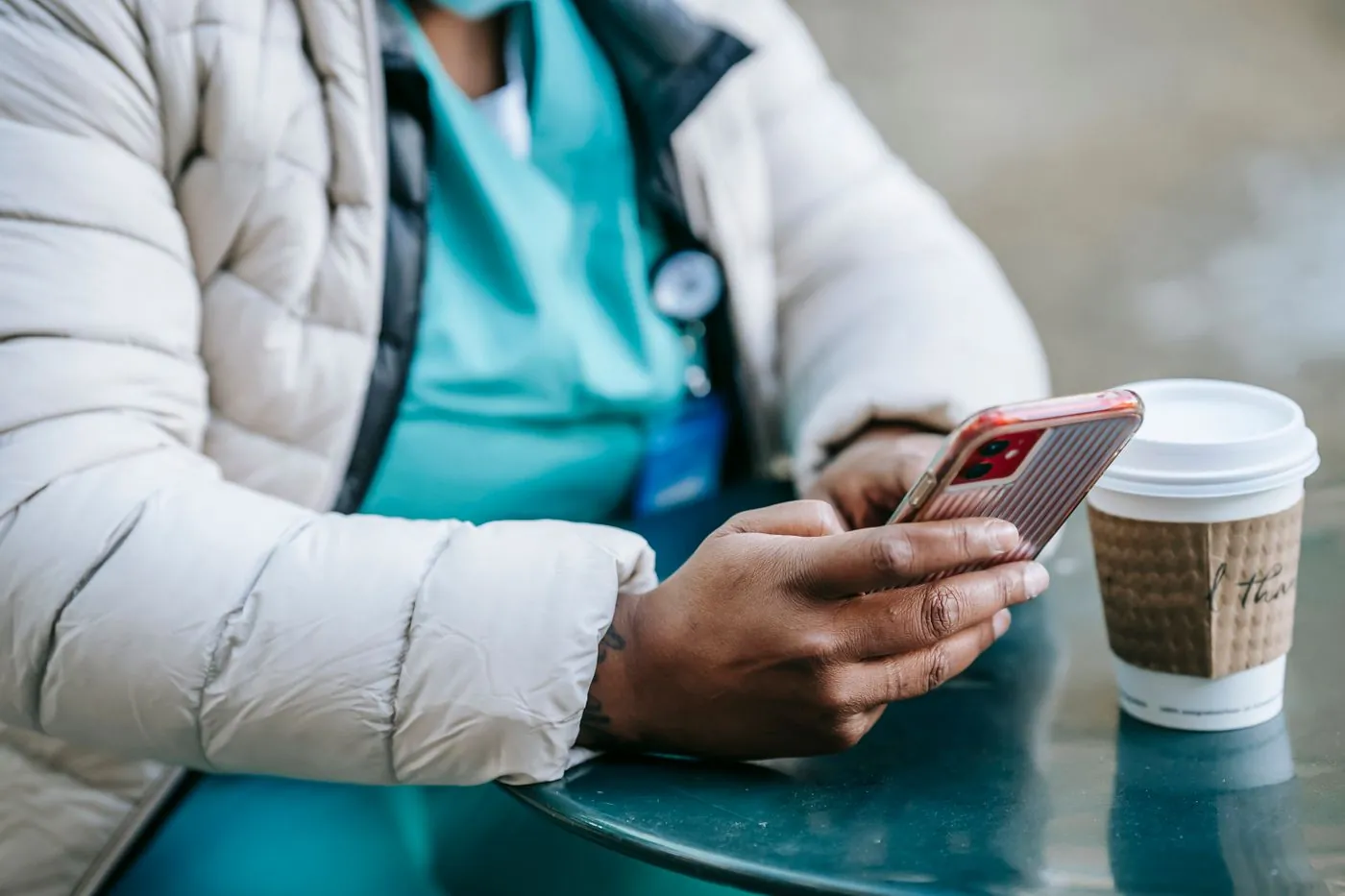
Photo: Laura James via Pexels
Nurses may use social media in their personal lives, but they may not post anything that identifies a patient or could lead someone to identify one. Hiding the name is not enough: the National Council of State Boards of Nursing (NCSBN) says a nickname, a room number, a diagnosis or a photo can still identify a patient, that privacy settings do not make a post safe, and that deleting a post does not remove it. The consequences range from a termination to a Board of Nursing investigation, and for students, dismissal from a program.
NCSBN's brochure "A Nurse's Guide to the Use of Social Media" is the clearest short statement of the rules. The edition we read is dated 11/24 and carries a 2024 copyright. This article walks through what it says, the mistakes it warns about, how Texas treats a related set of conduct, and a short checklist to use before you post, comment or send a message. It is education, not legal advice; your employer's policy and your Board of Nursing govern your own situation.
The brochure begins by saying social media is "ever-present" and has "both positive and negative influences." Used wisely, it can be a powerful learning tool. It also warns that the immediate nature of the medium "allows little time for reflective thought" and that posted content can be discoverable by a court of law "even when it is deleted."
Nurses are, in NCSBN's words, welcome to use social media in their personal lives. They can use electronic media to share workplace experiences, including events that are challenging or emotionally charged, but it is "imperative not to mention patients by name or provide any information or details that could possibly identify them." That sentence is the whole rule in miniature. You can say that a hard day happened. You cannot give details that point to a patient.
The brochure treats the two ideas as related but distinct. In its words, privacy is the patient's expectation to be treated with dignity and respect, and confidentiality is safeguarding patient information. A nurse can breach privacy by posting something degrading about a patient without naming anyone, and can breach confidentiality by sharing details with someone who has no care-related need to know.
Federal law adds a second layer. The brochure notes that the Health Insurance Portability and Accountability Act (HIPAA) defines individually identifiable information to include any information that relates to a person's past, present or future physical or mental health, or gives enough information to lead someone to believe it could identify the person. That definition is wide. A story with a rare condition, an unusual injury, a small town and a month can be enough.
NCSBN says that in most cases inappropriate disclosure is unintentional, and lists the beliefs that lead nurses astray. The table sets each one beside what the brochure says is true.
| Mistaken belief | What NCSBN says instead |
|---|---|
| "Only the person I sent it to can see it." | Content that is posted or sent can be passed on to others. |
| "If I delete it, it is gone." | Once posted, it lives on a server and can be discoverable in court; someone may also have taken a screenshot. |
| "No harm if only the recipient sees it." | Disclosure to the intended recipient alone is still a breach of confidentiality. |
| "I did not use a name, only a nickname, room number or diagnosis." | The patient can still be identified, so this is a breach and shows disrespect for privacy. |
| "The patient posted about themselves, so I can too." | A patient's right to share their own information is different from a provider's duty not to disclose without a care-related need. |
Source: NCSBN, A Nurse's Guide to the Use of Social Media, edition dated 11/24, section on common myths and misunderstandings.
NCSBN uses three short scenarios, and each shows a different failure.
The point of the cases. None of the three involved malice. Each involved a nurse or student trying to be supportive, proud or friendly in a moment that did not feel like a risk.
NCSBN says reports of inappropriate social media use may go to the Board of Nursing, and that the grounds a board may investigate, depending on the state, include unprofessional conduct, unethical conduct, moral turpitude, mismanagement of patient records, revealing a privileged communication and breach of confidentiality. If the allegations are found true, the nurse may face a reprimand or sanction, a monetary fine, or temporary or permanent loss of licensure.
Other consequences sit alongside the Board. The brochure says improper use may violate state and federal privacy laws, with civil and criminal penalties that can include fines and possible jail time, and that a nurse may be sued individually for defamation, invasion of privacy or harassment. An employer may terminate a nurse for violating its policies, and the organization itself may face a lawsuit or regulatory consequences.
Texas is one of those states. The Texas Board of Nursing's unprofessional conduct rule, 22 Texas Administrative Code Section 217.12, lists conduct such as improper management of client records and violating the professional boundaries of the nurse and client relationship. We did not find the word "social media" in the version we read, so do not assume a particular post is or is not covered; ask the Board or read the current rule. Our article on the Texas Board of Nursing complaint and investigation process explains what happens after a report is made.
Privacy is not the only issue. NCSBN says online comments about co-workers, even from home during nonwork hours, may constitute lateral violence, which includes intimidation and bullying that can happen online. It says nurses must not make disparaging remarks about employers or co-workers, must not post threatening, harassing, profane or other offensive comments, and must not speak on behalf of the employer unless authorized. Our piece on bullying and incivility in nursing covers the same behavior in person.
The brochure also asks nurses to maintain professional boundaries online, to use caution when having online social contact with patients or former patients, and to consult employer policies or a leader before work-related postings. A patient who initiates contact does not change the nurse's obligation.
If any answer is "yes" or "not sure," leave it unposted. A useful rule of thumb is that the first three checks are about other people and the fourth is about you. The brochure describes journaling and reflective practice as effective tools in nursing practice but warns that putting that reflection online can lead to disclosing too much. That is why many nurses keep their reflection in a private place offline.
Printable journal
Nurse Journal: 14 Days of Reflection
A sixteen-page printable reflection journal from Wahero Health Institute that helps you identify areas for improvement. It gives a private, offline place to write about a hard shift, so the thoughts you would be tempted to post stay out of the feed. Do not write patient-identifying details in it either; keep entries about your own reactions and learning.
Nurse Journal: 14 Days of Reflection, $12.99
Pay by Cash App, PayPal or Zelle at checkout; the download link is emailed once the payment is confirmed, usually the same day. Study material only: it does not replace the Board's requirements, your employer's policies or the judgment of a licensed clinician.
The student in NCSBN's third case lost her place in the program, and the school lost access to a clinical unit. If you are in clinical rotations, treat every unit, hallway and screen as private. Our guide to standing out in clinical rotations includes professional habits that protect you, and our new graduate survival guide covers the first months on the job when the urge to share a hard day is strongest.
Can a nurse post about a patient if no name is used? Not safely. NCSBN says a patient can still be identified by a nickname, room number, diagnosis or condition, and that doing so is a breach of confidentiality. Do not post details that could lead someone to identify a patient.
Does deleting a post fix the problem? No. NCSBN says that once something is posted it lives on a server that can be discoverable in a court of law, even if deleted, and someone may have taken a screenshot.
Can I take a photo of a patient with permission from the family? NCSBN says nurses must not take photos or videos of patients on personal devices and should follow employer policy for photos taken for legitimate purposes on employer-provided devices. Its example shows that permission from a family member is not valid consent.
What discipline can a nurse face for a social media breach? NCSBN lists a Board of Nursing reprimand or sanction, a fine, or temporary or permanent loss of licensure, plus possible civil and criminal penalties, personal lawsuits and employer termination, depending on the facts and the state.
Are comments about co-workers covered too? Yes. NCSBN says online comments about co-workers, even from home during nonwork hours, may constitute lateral violence, and that nurses must not make disparaging remarks about employers or co-workers.
Good judgment online starts with strong habits on the unit. Wahero Health Institute's in-person Texas courses, including New Graduate Transition to Practice, help new nurses build professional routines from their first weeks.
Related reading
Educational content only
This material is published by Wahero Health Institute for professional education and is not individual medical advice, a care protocol, or a substitute for clinical judgment. Always follow your facility's policies, your state's nurse practice act, and your own scope of practice, and confirm medication doses against a current authoritative reference before administration. See our Terms of Use.