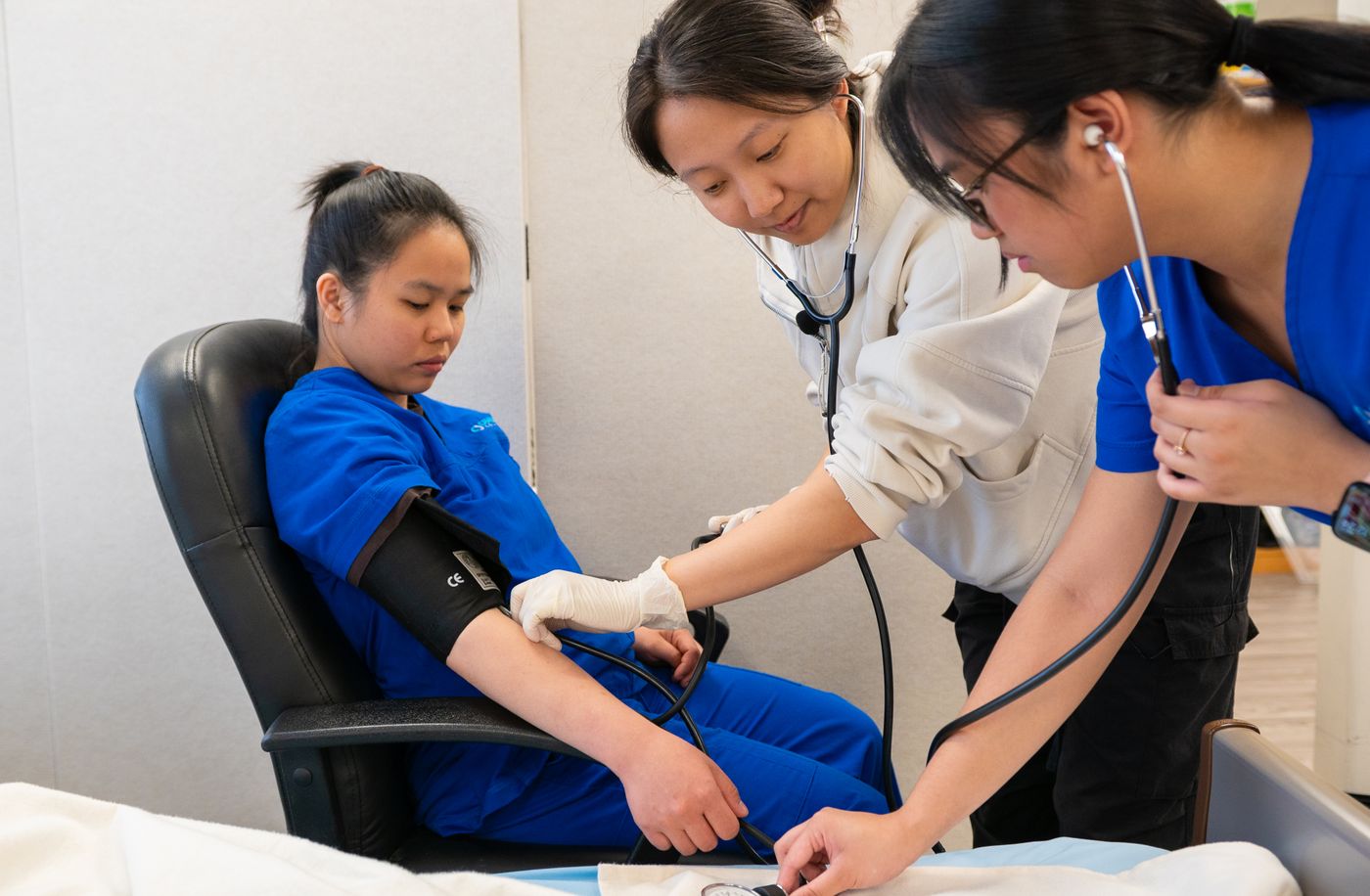
It is 6:10 in the morning and you are standing outside a medical-surgical unit with a clipboard, a badge that says STUDENT in large letters, and a stomach full of nerves. Your clinical instructor is somewhere on the floor with nine other students. The nurse you have been paired with has just taken report on five patients and has not yet looked up. You have twelve hours, a care plan due on Friday, and one question running through your head: what am I actually supposed to be doing?
Clinical rotations are where nursing school stops being a classroom and becomes a workplace. They are also where students are judged on things no exam measures: whether they show up prepared, whether they ask before acting, whether they can be trusted with information, and whether the staff nurse is glad or sorry to see them coming. Those judgments follow you into references, into job offers and, in many cases, into the unit that hires you after graduation.
This guide covers the professional side of rotations: how to prepare the week and the night before, how to behave on the unit, how to work with your instructor and the staff nurse, how to handle mistakes, and what separates the students people remember. It does not teach clinical procedures. Those belong to your program, your skills lab and your instructor, and they are always done under the supervision and policies of the facility you are in.
Every rotation has a chain of responsibility, and knowing it removes most of the confusion of the first shift. You are a student. You do not practice on a license, so everything you do on the unit happens under the supervision of your clinical instructor or, in some models, a designated preceptor, and inside the facility's own policies. The staff nurse remains responsible for their patients, including the ones you are helping with.
In Texas, the Board of Nursing sets limits on clinical group size for professional (RN) nursing programs. Under Board Rule 215.10, when a faculty member is the only person officially responsible for a clinical group in direct patient care, the group may not exceed ten students; when the faculty member is assisted by a clinical teaching assistant, the ratio may not exceed two to fifteen. The Board notes these ratios apply to direct patient care, not to skills lab, and that programs may use other supervision models, such as preceptors, within its rules. Your program's handbook will tell you which model you are in.
The practical point is simple. Your instructor is responsible for up to ten people spread across a unit, sometimes more than one unit. They cannot be beside you all day, which is exactly why your judgment about when to stop and ask matters so much.
Most rotation problems that happen on day one were created the week before. Facilities require students to complete onboarding before they set foot on the unit, and missing items can keep you off the floor entirely. Requirements vary by facility and by program, so treat the list below as prompts to check against your own clinical coordinator's list, not as the list itself.
Privacy training is one item you will almost certainly see. The U.S. Department of Health and Human Services explains that under the HIPAA Privacy Rule, a hospital's "health care operations" include training programs in which students learn under supervision, and that trainees count as part of a covered entity's workforce. The facility must train its workforce on its privacy policies, which is why you will complete the hospital's own privacy module even if your school already taught HIPAA.
| When | What to check | Why it matters |
|---|---|---|
| 2 to 3 weeks before | Facility onboarding modules, badge or access forms, any documents your program's clinical coordinator lists | Incomplete onboarding can keep you off the unit |
| 1 week before | Unit name, specialty, start time, parking, where to meet your instructor | Lateness on day one is remembered |
| 1 week before | Your program's clinical objectives and evaluation tool for this course | You are graded against it, so read it first |
| Night before | Any pre-assignment your program requires; review the course content it points to | Instructors notice who prepared |
| Night before | Uniform, badge, pens, pocket notebook (no patient identifiers), approved drug and lab references | Reduces morning stress |
| Night before | Sleep: set an alarm that allows travel time plus 15 minutes | A 6:30 start rewards an early night |
If your program uses pre-assignments, the work is a study exercise: look up the conditions, the procedures and the medications your instructor has named, using the references your program approves. Our article on getting the most from simulation day uses the same preparation logic, and it transfers directly to the clinical setting.
Staff nurses form an opinion of a student quickly. They are not looking for clinical brilliance. They are looking for signs that you will make their day easier rather than harder, and that you understand the limits of your role. Five habits do most of the work.
Communication habits matter as much as manners. When you report back to your nurse or instructor, use a structure so you do not ramble under pressure. Our guide to SBAR communication explains the format most facilities use, and the free SBAR template is small enough to keep in a pocket.
Students are rarely removed from a rotation for a knowledge gap. When it happens, it is usually conduct: a privacy breach, a photograph, a post, or a pattern of unreliability. These are entirely within your control.
Keep patient identifiers off anything you take home. Your notes for a care plan should use initials or a code your program approves, never names, dates of birth or record numbers, and many programs require that notes are shredded on the unit before you leave. Do not access any record you have not been assigned, including a friend's or a relative's, even out of concern. Electronic health records log every access.
Phones are a judgment call made by the facility, not by you. Some units ban personal phones at the bedside, others allow approved reference apps. Ask your instructor on day one and follow the stricter rule if in doubt. Never photograph anything on a unit.
Social media deserves its own warning. The National Council of State Boards of Nursing publishes guidance for nurses on social media, and its central message applies fully to students: a post can breach confidentiality even without a name, because a unit, a date and a description can identify a patient. A "long shift, crazy patient in room 12" post is a breach. Wait until you are home, then say nothing about patients at all.
At some point on a rotation you will make an error, nearly make one, or see something you are not sure about. Every student does. What instructors are evaluating is not whether it happened but what you did in the next five minutes.
The rule is to report immediately, to your instructor and to the nurse responsible for the patient, and to say plainly what happened. Do not try to fix it quietly, and do not wait until post-conference. A near miss reported straight away is a learning event. The same near miss discovered later becomes a question about your honesty, and honesty is the one thing a program cannot teach you after the fact.
The American Nurses Association's Code of Ethics for Nurses, revised in 2025, is the profession's statement of these obligations, and it applies to you as a future nurse now. Read the provisions on responsibility and accountability before your first rotation; your program may already assign them. Our article on medication errors covers how healthcare systems think about error reporting, and why a culture that rewards reporting is safer than one that punishes it.
Students who stand out on rotations are rarely the ones who know the most. They are the ones staff would happily work beside. These habits are what nurses and managers tend to remember:
Treat every rotation as an extended job interview, because in effect it is one. Unit managers and charge nurses often remember students by name, and a reputation for reliability on a rotation can open a door that an application alone would not. Keep a simple record of where you rotated, what you did and who supervised you; it will feed your new graduate resume and give you concrete stories for nursing interview questions.
Most programs end clinical days with a post-conference and some form of written work: a care plan, a concept map, or a reflective journal. It is tempting to treat the paperwork as a chore. It is the part of the rotation that turns experience into judgment. Our guide to reflective writing for nurses explains structures that make journals faster and more useful.
Protect your own recovery too. Early starts, long days and paperwork deadlines stack up across a semester. In announcing the 2025 revision of its Code of Ethics, the ANA stressed that self-care and patient care are inseparable: a nurse's own wellbeing directly affects the people they care for. That is not a luxury for later in your career; it is a habit to build while you are still a student.
One more distinction is worth holding onto. Rotations and simulation do different jobs, and Texas allows simulation to stand in for part of clinical learning in some programs. Our article on simulation hours versus clinical hours in Texas explains how the two fit together.
What should I bring to my first clinical rotation? Bring your facility badge, your program's uniform, a pen or two, a small notebook that will hold no patient identifiers, a watch with a second hand if your program asks for one, and any references your program approves. Check your clinical coordinator's list, because facilities and programs set their own requirements, and some do not allow personal phones at the bedside.
Can a nursing student do tasks the staff nurse asks for? Only tasks your program allows and your clinical instructor has approved for that day, done under the supervision your program requires and inside the facility's policies. If a nurse asks for something outside that, say politely that you have not been approved for it yet and offer to find your instructor. That is the expected professional response, and good nurses respect it.
How many students can one clinical instructor supervise in Texas? For professional (RN) nursing programs, Texas Board of Nursing Rule 215.10 says a faculty member who is the only person officially responsible for a clinical group in direct patient care may supervise no more than ten students. With a clinical teaching assistant, the ratio may not exceed two to fifteen. The ratios do not apply to skills lab, and programs can use other approved models, such as preceptors.
What happens if I make a mistake during clinicals? Report it immediately to your instructor and to the nurse responsible for the patient, and describe plainly what happened. Programs judge students far more on how quickly and honestly they report than on the error itself. Your program and the facility will have their own reporting process, and your instructor will guide you through it.
Can clinical rotations lead to a job offer? They can. Managers and charge nurses often remember reliable students, and a strong rotation can lead to a reference or an invitation to apply. There is no guarantee, so treat each rotation as an extended interview, keep a record of where you rotated and who supervised you, and ask for feedback at the midpoint.
Clinical rotations reward students who arrive already comfortable with structured communication, teamwork and the rhythm of a shift. Wahero's simulation-based training gives nursing students a low-pressure place to practice exactly that. Explore our courses, including head-to-toe assessment and the new graduate transition course, see the support we offer on our page for nursing students, or join a small-group session through live training.
Educational content only
This material is published by Wahero Health Institute for professional education and is not individual medical advice, a care protocol, or a substitute for clinical judgment. Always follow your facility's policies, your state's nurse practice act, and your own scope of practice, and confirm medication doses against a current authoritative reference before administration. See our Terms of Use.