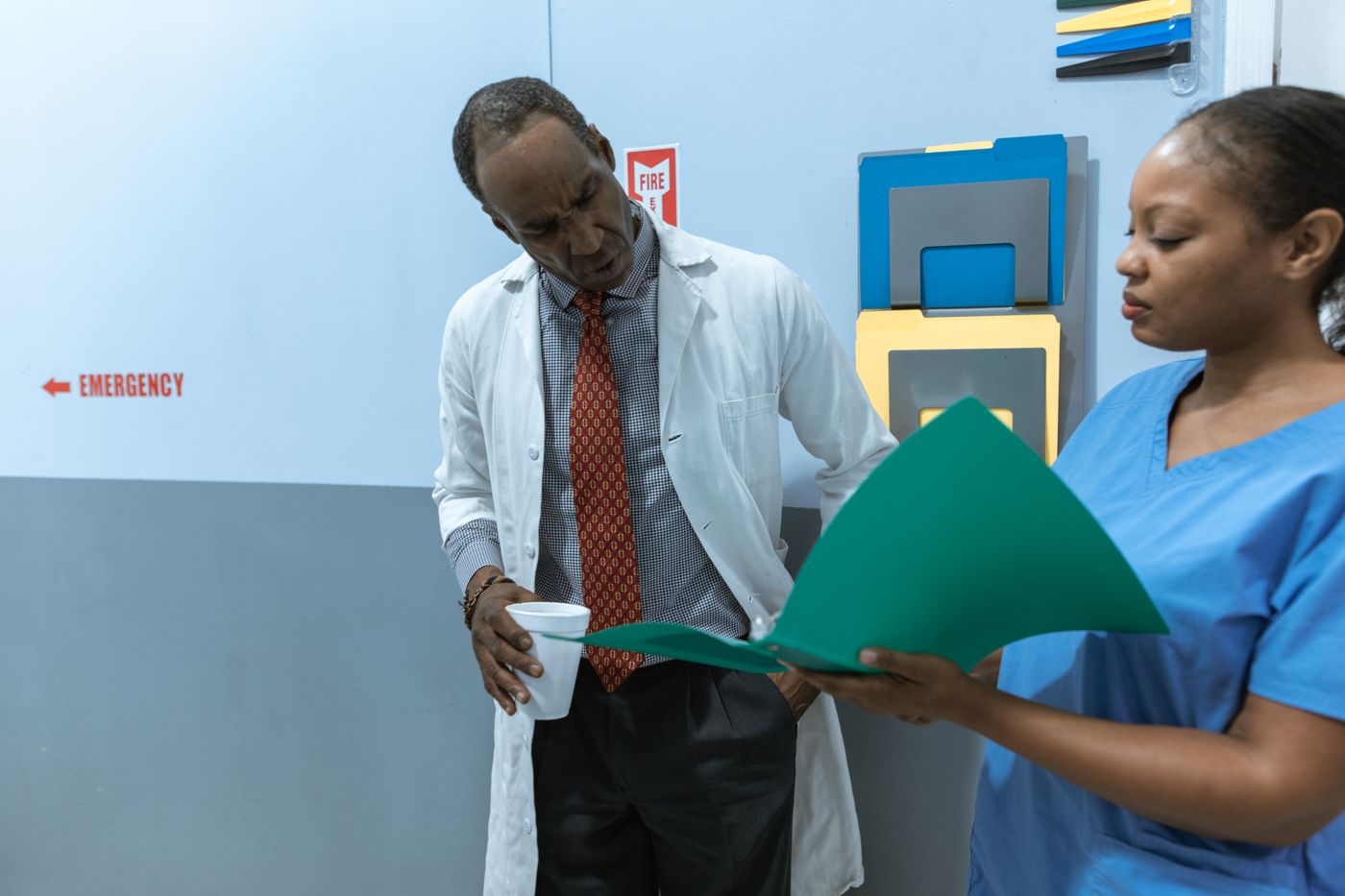
The overhead page comes while you are drawing up a medication down the hall. The words are calm and flat, the way they always are, but your heart rate jumps. It is your unit. Within seconds, people are moving fast toward a room, a cart is rolling, and a physician you have never met is asking who the primary nurse is. You are three months into your first job, and you realize you have no idea where to stand.
Almost every nurse remembers their first code blue. For many new graduates it is the moment they have been dreading since nursing school, partly because of the stakes and partly because nobody really describes what it is like to be in the room. Textbooks and certification courses cover what the team does. They say much less about what it feels like, where a brand-new nurse fits, and what happens to you afterward.
This article is about that second part. It does not teach resuscitation; that belongs to your certification course, your hospital's policies and the team in the room. It describes the roles you may be asked to fill, the feelings that are normal during and after, and why the debrief is part of the event, not an optional extra.
"Code blue" is the alert many US hospitals use to summon a resuscitation team to a patient in cardiac or respiratory arrest. The term is not universal. Some hospitals use other code names, and many have moved toward plain-language alerts that state the emergency and location directly. Your first task, long before any emergency, is to learn your own hospital's terms, the number to call, and what the overhead announcement sounds like.
Hospitals also have rapid response teams, called before an arrest when a patient is deteriorating. Knowing the difference matters, because calling early for help when you are worried about a patient is one of the most valuable things a new nurse can do. Our article on recognizing deterioration early explains why trends matter, and your facility's policy tells you who to call and when.
A code is a team event. Advanced life support training, such as the American Heart Association's courses, teaches resuscitation as coordinated teamwork with defined roles and a single team leader directing the effort. The exact roles and who fills them differ between hospitals, but the overall shape is familiar.
As a new graduate, you are unlikely to be leading anything. But you are not a spectator either. Depending on your hospital and whether the patient is yours, you may be asked to:
Whatever your role, the communication pattern you will hear is closed-loop communication: the leader gives a clear instruction to a named person, that person repeats it back, and reports when it is done. Use it yourself. If you are not sure what you were asked, say so out loud. That is not weakness; it is the safety mechanism working.
A code is a sudden, high-stakes event, and your body will treat it that way. The stress response that sharpens attention can also narrow it. Common experiences include a pounding heart, shaky hands, a dry mouth, tunnel vision, a sense that time is speeding up or slowing down, and difficulty taking in more than one instruction at once.
None of this means you are unsuited to nursing. It means you are a human being in an emergency. Experienced nurses feel it too; they have simply learned what it feels like and built habits that carry them through. Those habits come from repetition, which is why mock codes and simulation matter so much, as we explain below.
There is also a quieter feeling some new nurses describe: being in the room and feeling useless. Codes can be crowded, and if every role is filled, the most helpful thing may be to leave space, cover the unit and be ready. Doing that well is a contribution.
The adrenaline usually fades within the hour, and what follows can be surprising. Some nurses feel shaky, tearful or nauseated. Some feel flat and numb and then go straight back to their other patients, which is often exactly what the shift requires. Some replay moments for days, wondering whether they missed something earlier or should have acted differently. Some feel a strange mix of sadness and exhilaration. If the patient died, there may be grief, even for someone you met only that morning.
The term second victim, introduced by the physician Albert Wu in the BMJ in 2000, describes clinicians who are distressed by an adverse event or a patient's death, especially when they wonder whether they could have done something differently. A code does not have to involve any error for you to feel some of this. Our article on moral injury and second victim experiences explores what helps.
A debrief is a structured conversation after the event in which the team reviews what happened, what went well, what could be improved, and how people are doing. In its 2020 guidelines for resuscitation, the American Heart Association said that debriefing may be beneficial for the mental health and well-being of rescuers, including hospital-based health care workers. The same guidelines added recovery as a sixth link in the chain of survival, recognizing that recovery continues long after the event for patients and families, and they acknowledged that hospital-based care providers may experience emotional or psychological effects of caring for a patient in cardiac arrest.
Hospitals run debriefs in different ways. A "hot" debrief happens within minutes, often in or near the room. A "cold" debrief is scheduled later so more of the team can attend and reflect. Some units use a short structured tool; others are informal. If your unit does not debrief routinely, it is reasonable to ask your charge nurse whether one is possible.
For a new nurse, a good debrief does three things. It lets you hear what actually happened, which often corrects the frightening story your memory has built. It shows you that experienced colleagues felt the strain too. And it gives you specific learning for next time. Our article on why debriefing matters more than the scenario explains the educational mechanism.
You cannot make your first code calm, but you can make it less unfamiliar.
If reactions after a code stay with you for weeks, interfere with sleep, or make you dread work, talk to your manager, your employee assistance program or a health professional. If you are ever in crisis, call or text 988, the Suicide and Crisis Lifeline in the United States.
Is it normal to shake or cry after a code? Yes. A code triggers a strong stress response, and shaking, tearfulness, a racing mind or feeling numb afterward are common reactions in experienced clinicians as well as new ones. They usually settle over hours to days. If they persist, or affect your sleep and work for weeks, talk to your manager, your employee assistance program or a health professional.
What role will a new nurse usually have in a code? It depends on your hospital and on whether the patient is yours. New nurses are often asked to do things like record events, run for supplies, support the primary nurse, care for other patients on the unit, or help with the family. Your hospital's code policy and your unit's practice determine the roles, so ask your preceptor before you need to know.
What if I freeze during a code? Many people freeze for a moment, especially the first time. The team is designed so that no single person carries everything. Step back, find the team leader, say you are available, and accept whatever task you are given. Rehearsing in mock codes and simulation is the best way to shorten that freeze next time.
What is a code debrief? A debrief is a structured conversation after a resuscitation, where the team reviews what happened, what went well, what could improve and how people are feeling. The American Heart Association's 2020 guidelines say debriefing may be beneficial for the mental health and well-being of hospital-based health care workers. Some debriefs happen right away; others are scheduled later.
Can I ask to go to a mock code before my first real one? Yes, and you should. Many hospitals run mock codes or in-situ simulations on units, and educators are usually pleased when a new nurse asks to take part. Ask your educator or residency coordinator what is available, and ask your preceptor to walk you through where the emergency equipment is kept on your unit.
The best preparation for an emergency is having felt one safely first. Wahero Health Institute's in-person New Graduate Transition to Practice course and our simulation lab sessions in Texas let new nurses practice teamwork, communication and their role in a deteriorating-patient scenario, followed by a structured debrief that turns pressure into learning.
Related reading
Educational content only
This material is published by Wahero Health Institute for professional education and is not individual medical advice, a care protocol, or a substitute for clinical judgment. Always follow your facility's policies, your state's nurse practice act, and your own scope of practice, and confirm medication doses against a current authoritative reference before administration. See our Terms of Use.