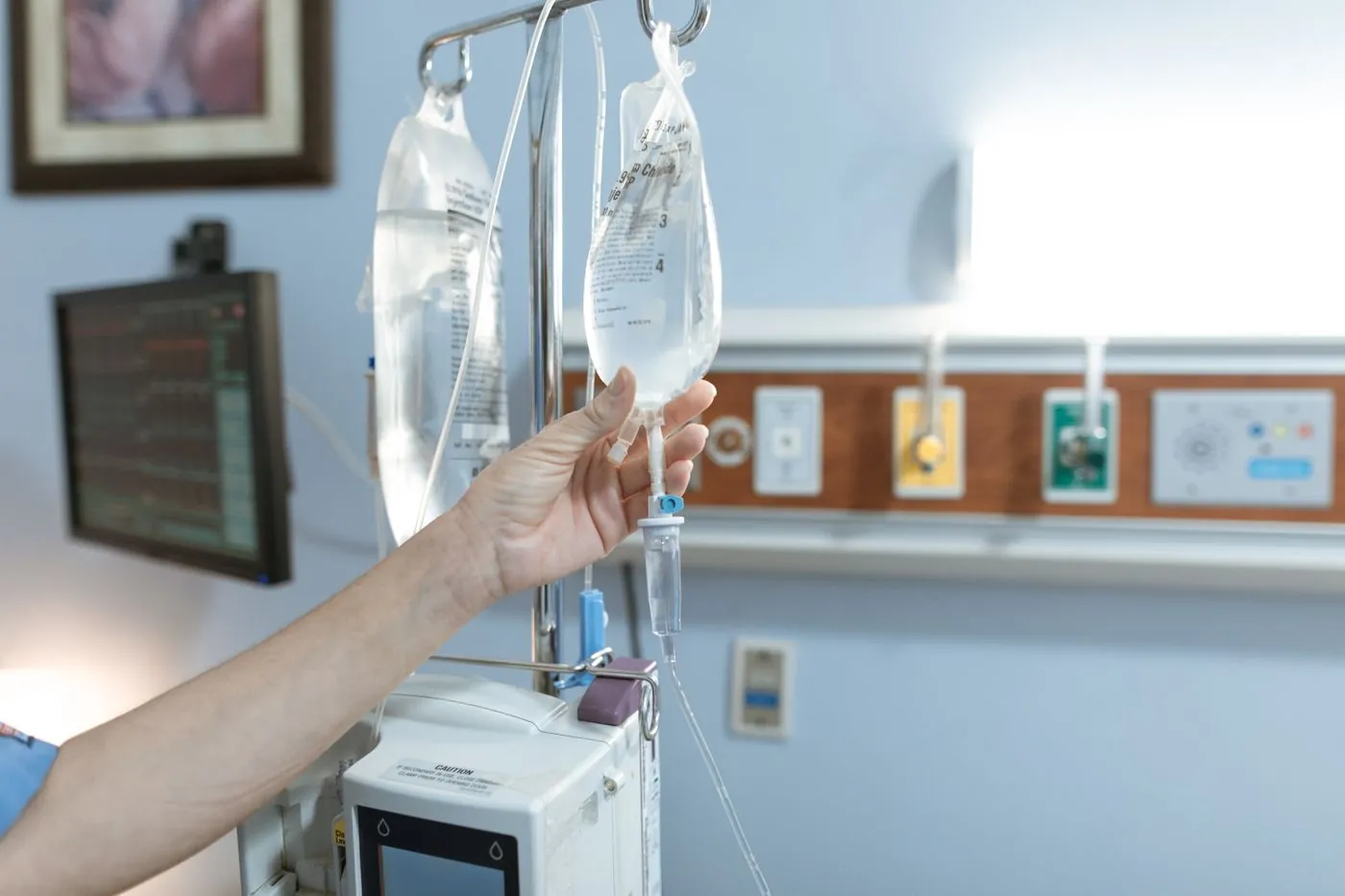
Photo: RDNE Stock project via Pexels
In 2001, a central line in an intensive care unit was treated as an unavoidable risk of a sick patient's stay. Infection was a hazard of the tube, and the tube was a necessity. A decade later, the Centers for Disease Control and Prevention (CDC) reported that bloodstream infections in ICU patients with central lines had fallen by 58 percent between 2001 and 2009. Nothing about the tubes had changed. What changed was that hospitals began to treat infection as a process failure that could be designed out.
That change in thinking is the core of central line infection prevention, and it is why nursing education spends so much time on checklists, audits and the authority to speak up. This article explains the evidence, the standards that now govern practice, and how nurses are assessed on the competency. It describes principles and published guidance. It is not a procedure for caring for a particular patient's line, and facility policy, manufacturer instructions and orders govern real care.
A central venous catheter ends in or near the heart's large veins and may stay in place for days or weeks. It carries fluids, medications and nutrition that could not safely be given through a small vein, and its access points are touched many times a day. Each of those features creates an opportunity for microorganisms to reach the bloodstream: during insertion, along the outside of the catheter from the skin, or through the hub when it is accessed. A central line-associated bloodstream infection (CLABSI) is the surveillance name for the result, and the CDC's National Healthcare Safety Network (NHSN) defines it so that hospitals can count and compare cases.
The stakes explain the attention. Vascular catheter-associated infection is one of the hospital-acquired conditions on the list of the Centers for Medicare and Medicaid Services, and CLABSI rates are publicly reported. For patients the stakes are more direct: a bloodstream infection in an already sick person adds treatment, length of stay and risk. This is not a skill problem that individual vigilance alone can solve, which is exactly what the best-known study in the field demonstrated.
In 2006, Peter Pronovost and colleagues reported in the New England Journal of Medicine on an intervention in Michigan ICUs, the Keystone ICU project. The intervention focused on five evidence-based practices drawn from CDC recommendations: hand hygiene, full-barrier precautions during insertion, chlorhexidine skin preparation, avoiding the femoral site where possible, and removing catheters that are no longer necessary. What made it different was the delivery. As the program is usually described, a checklist made the steps visible, an observer could halt an insertion that skipped a step, and units received regular feedback on their infection rates.
The results were striking. The median rate of catheter-related bloodstream infection fell from 2.7 per 1,000 catheter-days at baseline to zero at three months after implementation, and the mean rate fell from 7.7 to 1.4 by 16 to 18 months. The study covered more than 375,000 catheter-days of data. Its authors concluded that a large and sustained reduction was achievable with a package of simple interventions plus a change in culture. The study was a collaborative cohort study comparing rates before and after implementation, not a randomized trial, and rates in other hospitals depend on local factors, but its design shaped almost everything that followed.
The checklist works because anyone may stop the line. Accounts of the Keystone approach describe nurses being given authority to halt an insertion when a step was missed. The written steps were never the novelty; the permission to enforce them was.
Printable study guide
Peripheral IV Maintenance
A printable study guide to the basic skills of peripheral IV maintenance from Wahero Health Institute. It covers peripheral lines, not central lines, but the habits of hand hygiene, hub care and daily review of need are the same ones this article describes.
Peripheral IV Maintenance, $12.99
Pay by Cash App, PayPal or Zelle at checkout; the download link is emailed once the payment is confirmed, usually the same day. Study material only: it does not replace the Board's requirements, your employer's policies or the judgment of a licensed clinician.
Three bodies of guidance now frame practice. The CDC's Guidelines for the Prevention of Intravascular Catheter-Related Infections, issued in 2011 with a 2017 update on chlorhexidine dressings, cover education and training of staff, catheter and site selection, aseptic technique and barrier precautions, skin antisepsis, replacement strategies and surveillance. The Society for Healthcare Epidemiology of America (SHEA), the Infectious Diseases Society of America (IDSA) and the Association for Professionals in Infection Control and Epidemiology (APIC) published their updated compendium of strategies to prevent CLABSI in acute-care hospitals in 2022 (Buetti and colleagues, Infection Control and Hospital Epidemiology). SHEA sponsored the document, which was developed with IDSA, APIC, the American Hospital Association and The Joint Commission as partners.
The 2022 compendium separates essential practices, which every acute-care hospital is expected to have, from additional approaches to consider when infections continue despite them. Essential practices include education and competency of staff, bundles of insertion and maintenance practices, and daily review of whether the line is still needed; additional approaches include antimicrobial-impregnated catheters and infusion or vascular access teams. The Infusion Nurses Society's Infusion Therapy Standards of Practice, in their ninth edition of 2024, cover vascular access care from a nursing perspective, including device selection, site care, access-hub disinfection and removal. Where these documents differ on a detail, the facility's policy resolves it, and that policy changes as new evidence appears.
Every day, ask whether the line is still needed. The safest central line is the one that has been removed. Daily review of necessity is not a clerical step; it is the single prevention measure that does not depend on any technique being done well.
Programs usually teach the nursing role in three phases. Before and during insertion, the nurse supports the team: checking that the environment and supplies are ready, acting as the observer who confirms that each checklist item is done, and using the authority to stop and ask when something is missed. During maintenance, the published guidance describes repeated, unglamorous practices, among them hand hygiene, disinfection of access hubs, dressing integrity and patient and family teaching; the facility's policy and the manufacturer's instructions define how each is done and when. And at removal, the nurse is part of the question of whether the line is still needed.
Documentation turns those into evidence. A central line record typically includes the type and site, the insertion date, dressing status, any access events, and the date and reason for each review of necessity. Those entries produce the "line days" that surveillance teams use as the denominator of CLABSI rates, which is why careless charting makes an infection rate look better or worse than it is. Our articles on hand hygiene and sterile technique explain the two skills that carry most of the load.
Central line competency is rarely validated by a single test. Most programs combine a written or oral component, in which the learner explains the infection pathways, the evidence behind the bundle and the meaning of CLABSI surveillance, with an observed scenario on a manikin or task trainer. The assessor's checklist usually looks for hand hygiene at the right moments, an aseptic approach to the access hub as facility policy defines it, awareness of dressing integrity and what to report, correct documentation, and appropriate escalation when a line looks wrong.
Many facilities then keep checking. Audit-and-feedback programs, in which an observer records hand hygiene, hub disinfection and dressing status on real units and feeds the results back, are a common part of CLABSI reduction programs, and the 2022 compendium lists CLABSI surveillance among its essential practices. A competent nurse understands that the audit is not a test of character: it is the way a unit finds out what the checklist is missing.
Insertion itself is outside the scope of most nursing students' competency. It is performed by trained clinicians under the facility's privileging process, and the nurse's validated role is in preparation, observation and maintenance. Practices that apply to peripheral lines, such as the shift from routine to clinically indicated replacement described in our peripheral IV dwell time article, do not transfer to central lines without the facility's guidance.
Educational use. This article is learning material for nurses and nursing students. It is not clinical advice, and it does not replace your employer's policies, your facility's protocols, or the judgement of a licensed clinician. Always follow the standards and procedures in force where you practise.
What is a CLABSI? A central line-associated bloodstream infection is a bloodstream infection in a patient with a central line in place that is not related to an infection elsewhere. The Centers for Disease Control and Prevention (CDC) defines it for surveillance through its National Healthcare Safety Network (NHSN), and hospitals report CLABSI rates using that definition, so the exact criteria are in the NHSN protocol rather than in an article.
Did the Keystone ICU project really bring infection rates close to zero? In the 2006 New England Journal of Medicine study by Pronovost and colleagues, the median rate of catheter-related bloodstream infection in participating Michigan ICUs fell from 2.7 per 1,000 catheter-days at baseline to 0 at three months, and the mean rate fell from 7.7 to 1.4 by 16 to 18 months. The result is for those units and that program, and rates elsewhere depend on many local factors.
What is the nurse's role in preventing central line infections? Nurses are involved in hand hygiene, maintaining the line and its dressing according to facility policy, disinfecting access points before use, patient education, documenting the line and its necessity, and speaking up when a standard step is missed. As the Keystone ICU program is usually described, it also gave nurses authority to stop an insertion that broke the checklist.
How often should a central line dressing or tubing be changed? This article does not give intervals. The CDC guideline, the SHEA, IDSA and APIC compendium and the Infusion Nurses Society standards each address replacement, and your facility's policy sets the schedule in practice. The intervals differ by device type and have changed with new evidence.
Is this article instruction for caring for a patient's central line? No. It describes the standards and how competency is taught and assessed. Real care follows your facility's policy, the manufacturer's instructions for use and the orders for the patient, with supervised competency validation before independent practice.
Infection prevention is a competency validated by being watched, not by reading. Wahero Health Institute delivers IV therapy training in person across Texas, assessed under observation rather than by attendance. See the IV Therapy course or the full catalog.
Educational content only
This material is published by Wahero Health Institute for professional education and is not individual medical advice, a care protocol, or a substitute for clinical judgment. Always follow your facility's policies, your state's nurse practice act, and your own scope of practice, and confirm medication doses against a current authoritative reference before administration. See our Terms of Use.