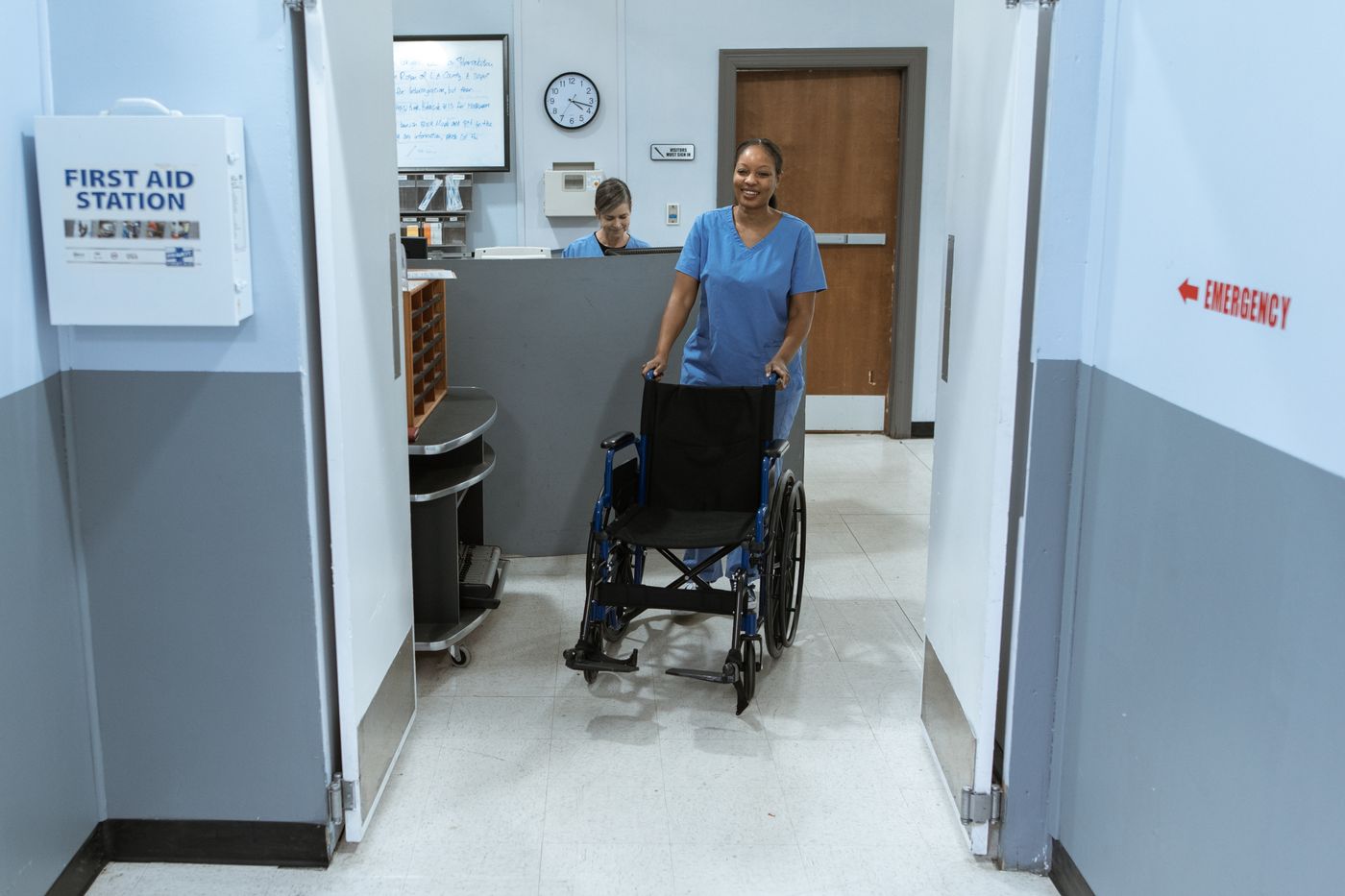
You have spent six years on a medical-surgical floor. You can run a six-patient assignment with your eyes half closed, you are the person new graduates find when a family is upset, and you have started to feel restless. Every time a patient goes to the ICU or comes up from the emergency department, part of you wants to follow them. Then a quieter voice asks whether you really want to be the new nurse again at this stage.
Changing specialties mid-career is one of the most common and least discussed moves in nursing. It can renew your interest in the work, open doors to certification and advancement, and fit a different season of your life. It also means giving up, for a while, the ease that comes from mastery.
This guide is for experienced nurses weighing a move: from med-surg to critical care, from the hospital to home health, from adult care to pediatrics, or anywhere else. It covers how to judge whether you are ready, how to test a specialty before you commit, what to negotiate in an internal transfer, what Texas rules say about taking on unfamiliar work, and how to survive your first ninety days.
Your RN license is not tied to a specialty. The Texas Board of Nursing licenses you as a registered nurse, and moving from one clinical area to another is an employment decision, not a licensing one. So why does it feel so daunting?
Patricia Benner's work explains it. In her 1984 book From Novice to Expert, Benner described five stages of skill acquisition, from novice to expert, and pointed out that expertise is tied to experience in a particular area of practice. An expert medical-surgical nurse who moves into a cardiac ICU may perform like an advanced beginner there for a time, because the patterns she reads so quickly on her old unit are not yet familiar in the new one.
That is not a step backward in ability. It is a predictable stage, and knowing it is coming takes much of the sting out of it. The nurses who struggle most after a move are often the ones who expected to feel expert within weeks.
Before you apply, separate your strengths into two piles. The first pile travels with you to almost any specialty. The second is specific to the area you are leaving, and you will need to rebuild its equivalent.
Skills that usually transfer well include prioritization across several patients, time management on a long shift, communicating with families, structured handover and escalation, delegation, documentation habits and working within a team. If you have precepted, you also bring the ability to learn and teach in parallel, which helps enormously in orientation.
Skills that usually need rebuilding include the new area's typical conditions and their usual course, unfamiliar equipment and monitoring, the unit's protocols and order sets, the pace and rhythm of the work, and the culture of the team. None of this is a reason not to move. It is the content of your orientation.
Reputation is a poor guide to whether you will enjoy a specialty. The same area can feel thrilling to one nurse and exhausting to another. The best evidence is time spent in it, and there are several ways to get that before you sign anything.
While you sample, ask yourself the questions that predict satisfaction: Do I like this patient population? Does the pace suit my temperament? Would I be happy with this unit's schedule pattern for the next five years? Does this team support its new members?
Most experienced nurses change specialties through an internal transfer, and there are good reasons. You know the systems, the policies and the people, so the only new thing is the specialty itself. A new employer can offer a fresh start or a better program, but you will be learning a new organization at the same time as a new clinical area.
| Question to ask | Why it matters |
|---|---|
| Will my base pay stay the same after the transfer? | Many employers keep an experienced nurse's rate, but some reset it; get the answer in writing |
| Do my clinical ladder level and any specialty differential carry over? | Ladder levels and differentials are often tied to a unit or specialty and may not move with you |
| How is seniority treated for scheduling and holidays? | Unit seniority can reset, which affects your choice of shifts and holidays |
| How long is orientation, and who decides when it ends? | Length varies widely; a competency-based end point is better than a fixed date |
| Will I have a dedicated preceptor? | Consistent preceptorship is one of the strongest supports for a nurse new to an area |
| Is there a formal course for the specialty? | A structured course alongside unit orientation speeds up pattern recognition |
| Does the transfer require a minimum time on my current unit? | Some employers require a set period in your current role before you can move |
Bring this table to your conversation with human resources and the hiring manager. If you are weighing offers from two employers, our guide to comparing nursing job offers helps you put the answers side by side.
The quality of your orientation shapes the first year more than anything else. Experienced nurses are sometimes given a shorter orientation on the assumption that they need less. Sometimes that is true. Often it is not, because what you need is not general nursing skill but specialty pattern recognition, and that takes exposure.
Professional associations publish structured orientation programs that many employers use. The American Association of Critical-Care Nurses offers Essentials of Critical Care Orientation, an online course designed for nurses who are new to intensive or progressive care, including those transferring from other areas of the hospital. The Emergency Nurses Association publishes education and orientation resources for nurses new to the emergency department. Ask whether your new unit uses one of these or its own curriculum, and whether course time is paid.
Then make the most of your preceptor. Agree on goals for each week, ask for feedback early, and say plainly when something is unfamiliar. Our article on getting the most from your preceptor was written for new graduates, but the techniques work just as well for an experienced nurse in a new area. If you have precepted before, resist the urge to prove yourself by going quiet; asking questions is how expertise is rebuilt.
A new specialty brings a professional responsibility that is easy to overlook in the excitement of the move. Texas Board Rule 217.11, the Board's standards of nursing practice, asks every nurse to accept only those assignments that take client safety into consideration and are commensurate with the nurse's educational preparation, experience, knowledge and physical and emotional ability. During orientation and the months after it, your experience in the new area is still growing, and that standard applies to you.
In practice, this means being honest with your charge nurse about what you have and have not yet done in the new setting, and asking for a different assignment, extra support or a resource nurse when you need one. Most units welcome this. It protects patients and it protects you.
Texas also gives nurses a formal route when a concern cannot be resolved informally. If your employer regularly employs, hires or contracts eight or more nurses, Texas Occupations Code Chapter 303 requires a nursing peer review committee, and Board Rule 217.20 lets you invoke Safe Harbor nursing peer review when you are asked to accept an assignment you believe could violate your duty to a patient. The Board's guidance says Safe Harbor must be invoked before you engage in the assignment, in writing, or orally if immediate patient needs prevent writing, followed by a detailed written account before you leave at the end of the shift. Our article on moral distress in nursing covers the process in more depth.
Many nurses who change specialties eventually want the matching certification, both for knowledge and for career value. Plan for it, but understand that eligibility rules are set by each certifying body and often depend on hours worked in the specialty.
Two examples show how different the rules can be. The Board of Certification for Emergency Nursing recommends two years of emergency nursing experience before candidates sit for the CEN exam, but it does not require it; the main requirement is a current, unencumbered RN license. The American Association of Critical-Care Nurses lists a two-year route for the CCRN that requires 1,750 hours of direct care of acutely or critically ill patients in the previous two years, with 875 of those hours in the most recent year, along with a five-year alternative.
There is a Texas bonus too. Under Board Rule 216, a nurse can meet the continuing competency requirement for license renewal by achieving, maintaining or renewing an approved national certification in their current area of practice, as an alternative to 20 contact hours of continuing education. Our overview of nursing certifications compares common options and costs.
The first three months follow a fairly predictable arc. Knowing it helps you judge your progress fairly instead of comparing yourself with nurses who have worked the unit for years.
Expect a dip in confidence somewhere around weeks four to eight, when the novelty fades and the volume of new information peaks. It passes. Keep a short note each week of one thing you can now do that you could not do before. On a bad day, that list is the most reliable evidence you have that the move is working. And protect your rest; learning a new specialty on top of shift work is tiring in a way that surprises many experienced nurses.
Is it too late to change nursing specialties after several years? No. Your RN license is not tied to a specialty, so moving areas is a career decision rather than a licensing one. What changes is that you become a novice again in the new area, so expect a full orientation and a period of feeling slow. Experienced nurses usually bring transferable strengths, such as time management, communication and escalation habits, that shorten the climb.
Do I need a certification before moving into the ICU or emergency department? Usually not. Many employers hire experienced nurses into a new specialty and expect certification later, once you meet the eligibility rules. For example, the Board of Certification for Emergency Nursing recommends two years of emergency experience before the CEN exam but does not require it, while the AACN's CCRN two-year route requires 1,750 hours of direct care of acutely or critically ill patients in the previous two years. Check your target employer's job description for any requirement.
Will I take a pay cut if I change specialties? It depends on the employer. Many hospitals keep an experienced nurse's base rate when they transfer internally, but specialty differentials, clinical ladder levels and seniority-based scheduling may not carry over. Ask human resources in writing how your pay, ladder level, paid time off and seniority will be treated before you accept the move.
What if I am assigned work in my new specialty that I am not yet competent to do safely? Texas Board Rule 217.11 asks every nurse to accept only assignments commensurate with their educational preparation, experience, knowledge and physical and emotional ability. Raise the concern with your charge nurse or manager first. If your employer is required to have a nursing peer review committee, which applies when it regularly employs, hires or contracts eight or more nurses, Texas law also lets you invoke Safe Harbor before accepting the assignment.
Should I try a specialty before committing? Yes, if you can. Shadow shifts, cross-training through a float pool, a per diem role or a step-down unit as a bridge can all show you what the work is really like. Many nurses find the pace, patient population and team culture matter more to their happiness than the specialty's reputation.
The fastest way to recover your confidence in a new specialty is deliberate practice before it counts. Wahero's simulation-based training lets experienced nurses rehearse unfamiliar situations, handovers and escalation in a setting where mistakes become lessons. Our courses include recognizing deterioration and ECG and dysrhythmia education for nurses moving toward higher-acuity areas, and our live training offers small-group sessions and one-to-one mentorship. Facility educators supporting internal transfers can contact us about on-site programs.
Educational content only
This material is published by Wahero Health Institute for professional education and is not individual medical advice, a care protocol, or a substitute for clinical judgment. Always follow your facility's policies, your state's nurse practice act, and your own scope of practice, and confirm medication doses against a current authoritative reference before administration. See our Terms of Use.