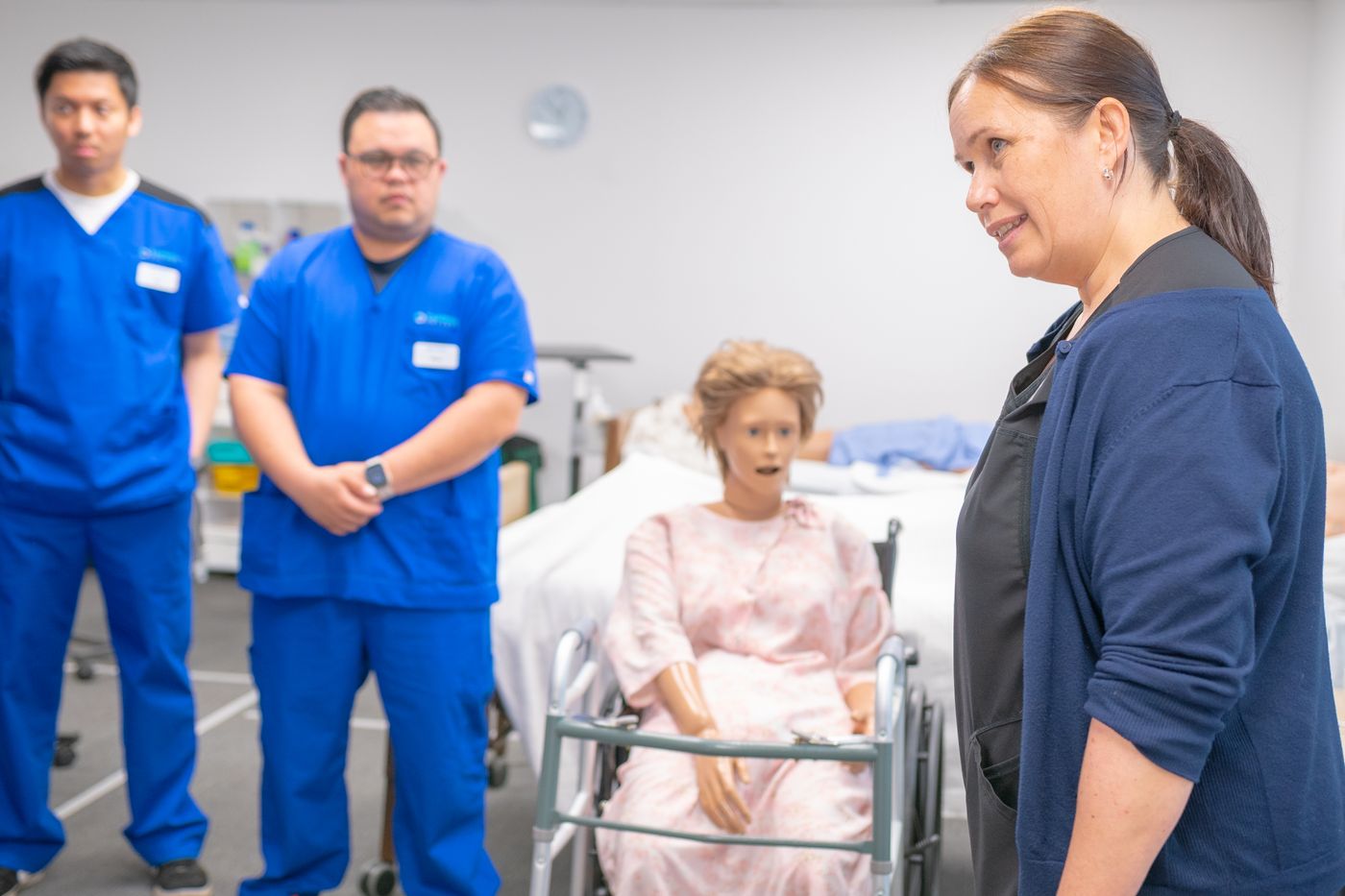
A charge nurse walks the floor and finds the unit's strongest clinician standing over a new graduate, redoing the dressing the graduate just placed, narrating every correction under her breath. The graduate is watching her own hands be replaced. She learns nothing except that she was wrong, and she will remember the feeling long after she has forgotten the technique.
The clinician is not a bad person or a bad nurse. She is an excellent nurse who has been handed a job nobody trained her to do. Somebody looked at her competence, assumed it would transmit, and assigned her a human being to develop. Clinical skill and the skill of building clinical skill in another person are two different capabilities, and the second one is the one that was never checked.
This is the quiet failure point in most orientation programs. Facilities invest heavily in curricula, checklists and onboarding timelines, then route all of it through preceptors who were selected for the wrong reasons and prepared for none of it. This article is about the fix: what preceptor development actually covers, why it moves new graduate retention, and how a facility builds a program that turns strong clinicians into people who can grow other clinicians.
The problem has a name in cognitive science: the expert blind spot, or the curse of knowledge. As a skill becomes automatic, the steps that make it up drop out of conscious awareness. An expert nurse hangs a piggyback, primes the line and checks compatibility as a single fluid motion, and could not slow it into its component decisions if asked, because for her it is no longer made of components. It is one thing.
That fluency is what makes bedside care safe and fast. It is also what makes unassisted teaching hard. The learner needs the components, the branch points, the "here is why I checked the bag before I spiked it" that the expert stopped saying to herself years ago. Expertise does not come with a built-in ability to decompose itself for a novice. That ability is a separate skill, and it can be taught.
The core confusion. Being able to do something and being able to develop that ability in another person are two different competencies. A facility that assumes the first guarantees the second is staking new graduate retention on an assumption it has never tested.
There is a selection problem layered on top. Preceptors are frequently chosen for availability rather than aptitude: who is on shift, who is senior, who is hard to say no to. Aptitude for teaching, patience under repetition, comfort letting a learner struggle productively, willingness to give a hard message kindly, is rarely part of the selection at all. Preceptor development addresses both halves: it selects for the right traits and then builds the missing skills.
A serious preceptor program is not an afternoon of encouragement. It teaches a defined skill set, the same way any clinical competency is taught, because that is what these are: competencies. Four areas carry most of the weight.
Adult learning principles. Adults do not learn like students in a lecture hall, and Malcolm Knowles's work on andragogy, the foundation most nurse educators are taught from, explains why. Adult learners need to know why something matters before they will invest in it, they bring real experience that either helps or interferes, and they learn best when the material attaches to a problem they are actually facing on shift. A preceptor who understands this stops front-loading theory and starts anchoring every lesson to the patient in front of the orientee.
Feedback that changes behavior. The instinct to either praise vaguely ("you did great") or correct globally ("you need to be more organized") produces nothing a learner can act on. Preceptor development teaches structured feedback: specific, timely, behavioral, and tied to a next action. Frameworks such as advocacy-inquiry, drawn from the simulation debriefing literature, give preceptors a way to name what they observed and then ask what the learner was thinking, rather than assuming.
Assessment against a standard. A preceptor is not only a coach, they are the eyes that decide whether an orientee is safe to practice independently. That is an assessment role, and it requires knowing the difference between "I like her" and "she has demonstrated this competency against a defined criterion, more than once, unprompted." Preceptor development teaches how to observe against explicit criteria and how to document what was actually seen.
Managing the struggling orientee. This is the area preceptors most want and least receive. Programs teach how to distinguish a normal learning curve from a genuine safety concern, how to build a focused improvement plan, and when and how to escalate to the educator or manager rather than carrying a failing orientee silently until the contract ends.
Of the four, feedback deserves its own discussion, because it is where good intentions do the most damage. A preceptor who withholds correction to protect the relationship produces an orientee who reaches independent practice with uncorrected habits. A preceptor who corrects constantly and globally produces an orientee who stops taking initiative because everything gets rewritten anyway. The dressing scene from the opening is the second failure in its purest form.
Useful feedback has a shape. It describes a specific observed behavior rather than a trait, it happens close enough to the event that the learner can still remember their own reasoning, and it ends with something the learner can do differently next time. "When you drew up the med you turned your back on the pump alarm for about thirty seconds. Walk me through what you were prioritizing" is a sentence a learner can work with. "You need better time management" is not.
The test for any piece of feedback. Could the learner do something different on the next shift because you said it? If the answer is no, you have delivered a verdict, not feedback. Verdicts protect the preceptor's feelings. Feedback develops the nurse.
This is also where the coaching and assessment roles collide. The same preceptor who spends three weeks encouraging an orientee must, at the end, render an honest judgment about readiness. Preceptors never taught to hold both roles collapse one into the other: they coach so warmly they cannot fail anyone, or assess so coldly they never coach. Development keeps the two distinct and gives the preceptor language for switching between them openly.
The business case does not require inventing numbers to see. First-year turnover among new graduate nurses is the expensive kind, because the facility has paid the full cost of recruitment and orientation and captured almost none of the productive return before the nurse leaves. Anything that reliably converts a shaky first year into a stable one pays for itself quickly.
The mechanism runs through the orientee's daily experience. Marlene Kramer's account of reality shock, and Judith Duchscher's later work on transition shock, describe the same collision: a new nurse arrives with an idea of the work that meets the unit as it actually runs. A prepared preceptor is the single most important variable in whether that collision is survivable. She normalizes the struggle, paces the exposure, catches errors without humiliation, and shows the graduate evidence that they are improving. An unprepared preceptor, however skilled clinically, often does the opposite without meaning to.
There is a second return facilities routinely miss. Being trained as a preceptor is itself a retention lever for the experienced nurse. It recognizes her expertise, gives her a development path that does not require leaving the bedside, and reduces the exhaustion of doing a hard job with no framework for it. A preceptor who feels equipped and valued is less likely to burn out on the role and quietly ask off it, which is how units lose their best teachers. Our guide to building and buying clinical workforce training places preceptor development inside that larger retention picture.
A program does not have to be elaborate to be real. It has to be deliberate. Five components separate a functioning program from a title handed out on a busy shift.
Select on the right criteria. Draw preceptors from clinicians who show teaching aptitude, patience and communication, not simply seniority or availability. Make it a role people are chosen for and can decline, not a default that lands on whoever is present. The moment precepting becomes a punishment for being reliable, the program is already failing.
Train the role before it starts. Deliver structured preparation in adult learning, feedback, assessment and managing struggle before a preceptor takes their first orientee, not as reading emailed after the fact. This is the part facilities most often skip, and it is the part that most reliably changes outcomes. Live, facilitated practice matters here for the same reason it matters at the bedside: these are performance skills, and performance skills are built by doing them under observation.
Protect the time. A preceptor precepting on a full patient assignment is being asked to do two jobs at once and will do the urgent one, which is patient care, at the expense of the developmental one. Even partial workload adjustment during intensive orientation signals that the facility means it. A program that demands precepting without protecting any time for it is a program in name only.
Give them the tools. Competency checklists, a shared assessment language, clear escalation routes for a struggling orientee, and a named educator to call. Tools convert individual goodwill into a repeatable process that does not depend on which preceptor an orientee happens to draw.
Support and refresh. Preceptor forums, refreshers, and recognition keep the skill alive and the role attractive. Recognition matters more than facilities expect, because the work is invisible when it goes well and blamed when it does not.
Programs at this level are what turn onboarding from a hopeful timeline into a reliable process. They sit directly alongside a structured approach to the orientee experience, which we cover in onboarding new graduates, and they are one of the workforce services we deliver on site through our mobile clinical education team rather than asking a facility to build the whole thing alone. The skill content itself, adult learning through to structured feedback, runs through our courses.
An honest article names its own limits. Preceptor development raises the floor of the orientation experience, but it cannot fix a unit that is chronically short-staffed, because a preceptor with no protected time and a full assignment will default to patient care every time, and should. The best-trained preceptor in the building still cannot teach and cover six patients at once.
So preceptor development is necessary and not sufficient. It is the highest-leverage thing a facility can do inside its current staffing, which is reason enough to do it. But leadership should hold both ideas at once: prepare the preceptors, and protect the conditions that let preparation matter. A program that trains preceptors and then strands them on impossible assignments has spent money to create frustration.
Yes, and the clinical excellence is exactly why. The more automatic a skill becomes, the harder it is to explain its component steps to a beginner, a pattern cognitive scientists call the expert blind spot. Preceptor training gives strong clinicians the separate skill of decomposing what they do so a novice can learn it, plus the feedback and assessment skills that clinical practice never required.
It varies by facility and by how much protected practice you build in, so the honest answer is that it depends on your goals rather than a fixed number. Effective preparation is not a single lecture; it needs facilitated practice of feedback and assessment because those are performance skills. What matters more than total hours is that the preparation happens before a preceptor takes their first orientee, not as reading sent afterward.
They overlap but are not the same. A preceptor has a defined, time-limited role tied to orientation and carries an assessment responsibility: deciding whether an orientee is safe to practice independently. A mentor relationship is usually longer, voluntary, developmental and without that formal gatekeeping duty. A preceptor can become a mentor, but the assessment role is what makes precepting a distinct competency that needs its own preparation.
Select for teaching aptitude, patience, and communication rather than seniority or who happens to be available. Look for clinicians who already explain their thinking aloud, who tolerate a learner struggling productively without taking over, and who can deliver a hard message kindly. Make the role something people are chosen for and can decline, so precepting never becomes a penalty for being the reliable one on shift.
Some can, if they have an education department with capacity to design and facilitate it. Many units do not, which is why the preparation gets skipped. Bringing in a structured program, on site, is often the fastest way to stand one up without pulling your educators off everything else. Either way the components are the same: select, train, protect time, equip, and sustain.
Your preceptors carry every new nurse you hire. Preparing them is the highest-leverage training investment most facilities are not yet making. We deliver preceptor development on site, built around your competencies and your unit realities, so strong clinicians become people who can reliably grow other clinicians.
Educational content only
This material is published by Wahero Health Institute for professional education. It describes the design of preceptor and workforce training programs, and it is not clinical advice, an employment policy, or a substitute for your organization's own onboarding and competency procedures. Follow the standards and processes in force where you practice. See our Terms of Use.