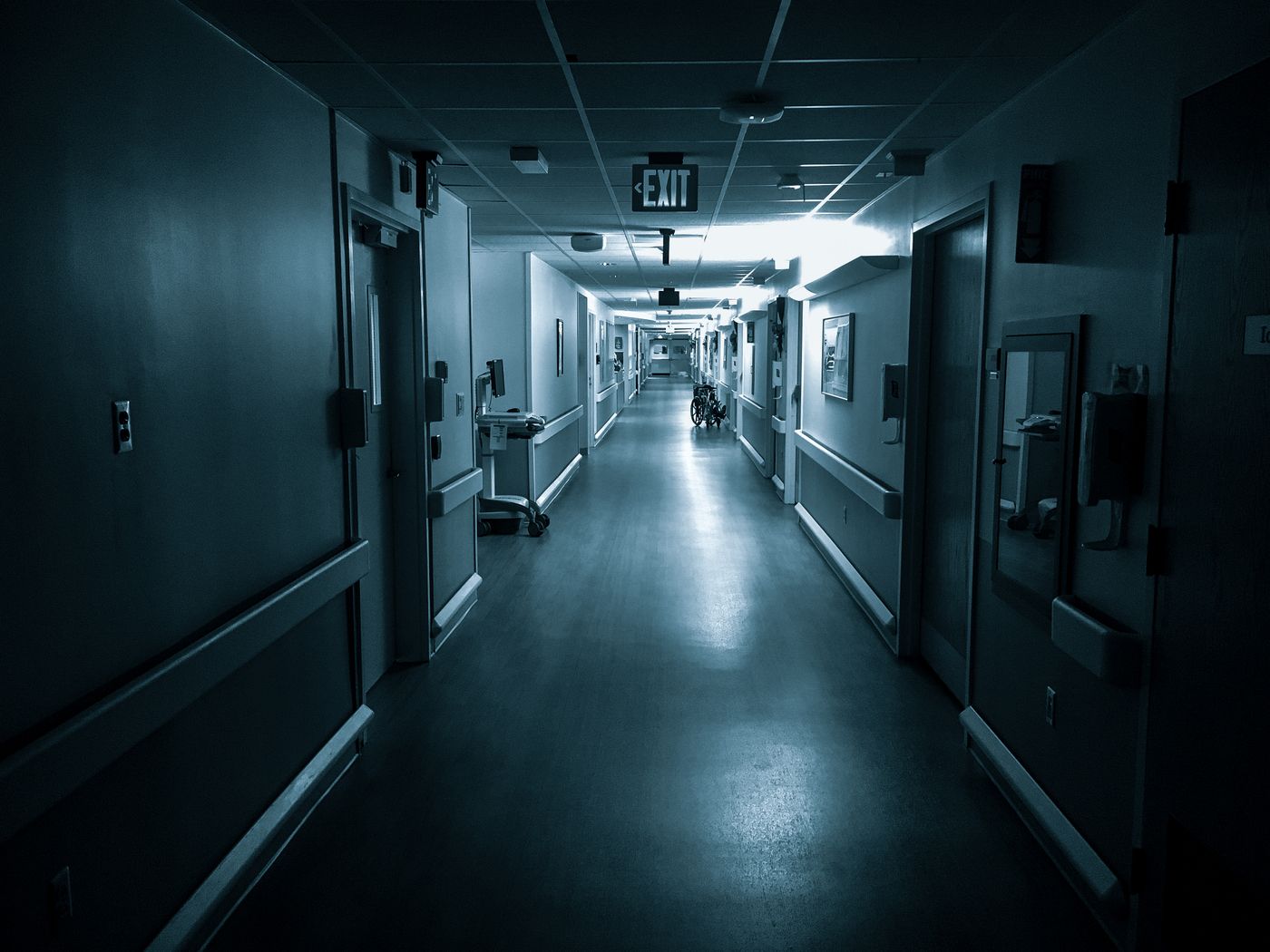
It is 4:10 in the morning. The unit has gone quiet in the way it only goes quiet at that hour: no visitors, no rounds, just the pumps and a call light two rooms down. You have been awake for nineteen hours, and you have checked the same order three times because the number will not stay in your head.
Nurses call that being tired. It is a bad description, and it is one reason night shift advice so often fails. Tired implies a fuel gauge that coffee will top up. What is happening at 4 a.m. is that your brain is running a program written for sleep while you ask it to run one written for work.
This article treats the night shift as the physiological problem it is: where the name came from, why misalignment is not the same as sleep deprivation, what the evidence says about health, why the small hours carry their own error risk, and which countermeasures actually hold.
Watch on YouTube: Why is the night shift called The Graveyard Shift?, from our educator's own channel, Spice to health$Nursevibes.
The version you have almost certainly heard goes like this: people were once buried alive, so a string was tied to the corpse's finger and run up to a bell above the grave, and someone was paid to sit in the cemetery all night listening for it. The same story is offered as the origin of "saved by the bell" and "dead ringer."
Lexicographers do not accept it. Safety coffins were real, but there is no evidence of a paid trade of bell-listening watchmen, and those two phrases trace to boxing and to horse racing instead. The likelier origin, as the video above puts it, is plainer and rather more atmospheric: the phrase appears around the turn of the twentieth century alongside the nautical "graveyard watch" for the midnight to four watch at sea. It names the feel of the hours, which any nurse who has walked a dim corridor at 3 a.m. recognizes at once.
Alertness is governed by two systems that normally cooperate and, on nights, stop. The first is homeostatic sleep drive: pressure that builds the longer you are awake, associated with accumulating adenosine. That is what people mean by tired, and it is what caffeine interferes with, by blocking adenosine receptors rather than removing the need.
The second is the circadian clock, which does not care how long you have been awake. It is run by the suprachiasmatic nucleus in the hypothalamus and set by light, reported through retinal cells containing melanopsin that respond most strongly to short-wavelength blue. That clock times melatonin release, core temperature, cortisol and alertness itself.
Core temperature reaches its low point in the early morning, and reaction time and vigilance bottom out near it. This circadian nadir falls roughly between 2 a.m. and 6 a.m. in a day-adapted person, so the sharpest assessment of your night is demanded at the hour your biology has scheduled its trough.
Night work is not merely unpleasant. In 2007 the International Agency for Research on Cancer, the cancer research arm of the World Health Organization, classified shift work involving circadian disruption as probably carcinogenic to humans, its Group 2A category, and an IARC working group reviewed night shift work again in 2019 and kept that classification. Group 2A describes the strength of the evidence, not any individual's fate, and the research behind it is observational. It is still a serious signal from a serious body.
Sleep medicine also recognizes shift work disorder formally. The International Classification of Sleep Disorders lists it among the circadian rhythm sleep-wake disorders: insomnia when you try to sleep, sleepiness when you must be awake, tied to a work schedule. It is diagnosable and treatable.
The professional bodies have responded. The American Nurses Association's position on nurse fatigue makes it a joint responsibility: the employer designs schedules that make rest possible, and the nurse arrives fit for duty and declines assignments they cannot safely perform. The National Institute for Occupational Safety and Health, part of the CDC, publishes free training for nurses on shift work and long hours.
The Joint Commission devoted Sentinel Event Alert 48, issued in December 2011, to health care worker fatigue and patient safety, linking extended hours and inadequate rest to adverse events and asking organizations to treat fatigue as a system risk rather than an individual failing. Units that treat it as a discipline problem stop hearing about it.
Three things converge in the small hours. First, vigilance decrement: sustained attention degrades with time on task, and faster against the circadian trough, which is exactly what repetitive verification such as a medication check depends on. Our article on why medication errors happen argues the same from the other direction.
Second, the support structure thins: fewer staff, no pharmacist at your elbow, fewer colleagues to think out loud with, and a higher threshold before anyone wakes a provider, so the same slip travels further. Third, sleep inertia. Waking from deep sleep leaves decision speed measurably impaired, which is why an unplanned ninety minute doze can be worse than no nap at all. For new nurses this is the hardest part of nights, a theme in our guide to surviving the first year.
The most useful single concept for a rotating nurse is anchor sleep: one fixed block at the same clock time every day, on work days and days off alike, with the rest of your sleep arranged around it. A stable core keeps the rhythm partially entrained instead of letting it drift.
In practice a nurse on nights protects a morning block, say 9 a.m. to 2 p.m., as untouchable on every night-shift day, then sleeps a shorter second block before the shift. On days off the anchor is preserved even though the pull is to flip back to daytime living. Flipping fully every week means permanently re-adapting and never adapted, which is why so many nurses feel jet-lagged without ever leaving Texas.
The environment does more work here than people expect. Coverings that genuinely block light, a cool room, white noise, a phone that is off rather than silent, and a household that has agreed what counts as an emergency are the difference between five hours of sleep and five hours in bed.
If the clock is set by light, then light is the intervention. The direction of the effect depends on timing relative to your temperature minimum: light before the trough tends to delay the clock, and light after it tends to advance it. A night worker wants delay, because a delayed clock tolerates being awake at 3 a.m. On the unit, seek bright light in the first half of the shift and taper in the last hours.
On the way home, block the morning sun. Wraparound sunglasses are the cheapest effective piece of shift work equipment a nurse can own, because daylight between the hospital door and your front door is the signal telling your clock to be a day person again. Keep the house dim while you wind down, the bedroom fully dark, then get bright light quickly when you wake.
Napping is the best evidenced fatigue countermeasure available to shift workers, and NASA's aviation fatigue research is why planned short naps entered operational practice at all. The prophylactic nap, taken before the shift, is the more reliable form, because it does not depend on a break that never comes.
The on-shift nap needs care. Twenty to thirty minutes usually keeps you out of the deepest stages and limits sleep inertia; longer risks waking mid-cycle at the wrong moment. Build in a few minutes of buffer before you take a handover, and tell a colleague so you are woken deliberately.
Caffeine deserves plain talk. It masks the adenosine signal rather than resolving fatigue, and it lingers far longer than most people assume. Front-load it early and set a cut-off well before your intended sleep: a large dose at 5 a.m. buys the drive home at the cost of the sleep that follows it.
Ask an experienced night nurse for the moment that frightened them most and a striking number describe a road, not a patient. Drowsy driving is recognized by the National Highway Traffic Safety Administration as a genuine crash factor, and the post-night commute stacks every risk at once: the circadian trough, hours of sleep pressure, a monotonous familiar route, and morning sun.
Microsleeps of a few seconds do not feel like sleep. They feel like a gap. Arriving home with no memory of the last few miles is not autopilot; it is closer to being intermittently unconscious at speed.
The countermeasures are unglamorous and they work. Take a short nap before driving if you have any doubt. Carpool with a colleague on your roster. Use a rideshare after a bad night and treat the fare as a cost of the job. Use the sleep room without apology if your facility has one.
Nurses can do all of this correctly and still be defeated by a badly built roster, which is why the American Nurses Association places schedule design on the employer's side of the ledger. A few features are worth asking about in an interview.
The clearest is direction of rotation. Forward rotation, days to evenings to nights, works with the body's preference to delay, since the human clock lengthens a day more easily than it shortens one. Backward rotation asks for a phase advance at every step and is harder to tolerate. Where a unit rotates at all, forward costs nothing to implement.
Beyond that: real recovery after a night block rather than one day off before a day shift, rosters published far enough ahead that sleep can be planned, no same-day flips between day and night, respect for the limits on consecutive shifts and weekly hours that professional bodies recommend, and a fatigue route that treats "I am not safe to drive" as information rather than insubordination. Facilities that build this deliberately are usually the ones that also invest in ongoing clinical education: performance is produced by the system around a nurse, not extracted from willpower.
Is permanent nights better than rotating shifts? For many nurses, yes, because a stable schedule allows partial circadian adaptation that rotation never permits. The catch is that most permanent night workers revert to daytime living on days off, undoing it weekly. Pair it with an anchor block that survives the weekend.
Does melatonin help night shift nurses? Melatonin is a timing signal rather than a sedative, so its effect depends heavily on dose and timing, and the wrong timing can shift your clock the wrong way. It is sold over the counter here, but it is still a decision for a clinician who knows your schedule and history.
What if I am too impaired to finish a shift safely? Say so early to your charge nurse and follow your facility's fatigue policy. American Nurses Association guidance supports a nurse declining an assignment they cannot safely perform, and raising it at hour four is a better conversation than explaining an error at hour eleven.
Are new graduates put on nights too early? Often. Nights combine the least support with the highest fatigue for the person with the least experience. Ask who your overnight resource is and how escalation works at 3 a.m.
Competence at 2 p.m. and competence at 4 a.m. are not the same skill, and the second one is rehearsable. Wahero Health Institute runs scenario-based training, escalation drills and fatigue-aware safety sessions for hospital teams and nursing programs across Texas. Students can work through the same material in the portal.
Educational content only
This material is published by Wahero Health Institute for professional education and is not individual medical advice, a care protocol, or a substitute for clinical judgment. Always follow your facility's policies, your state's nurse practice act, and your own scope of practice, and confirm medication doses against a current authoritative reference before administration. See our Terms of Use.